
Right now, xG feels like the hottest metric in football.
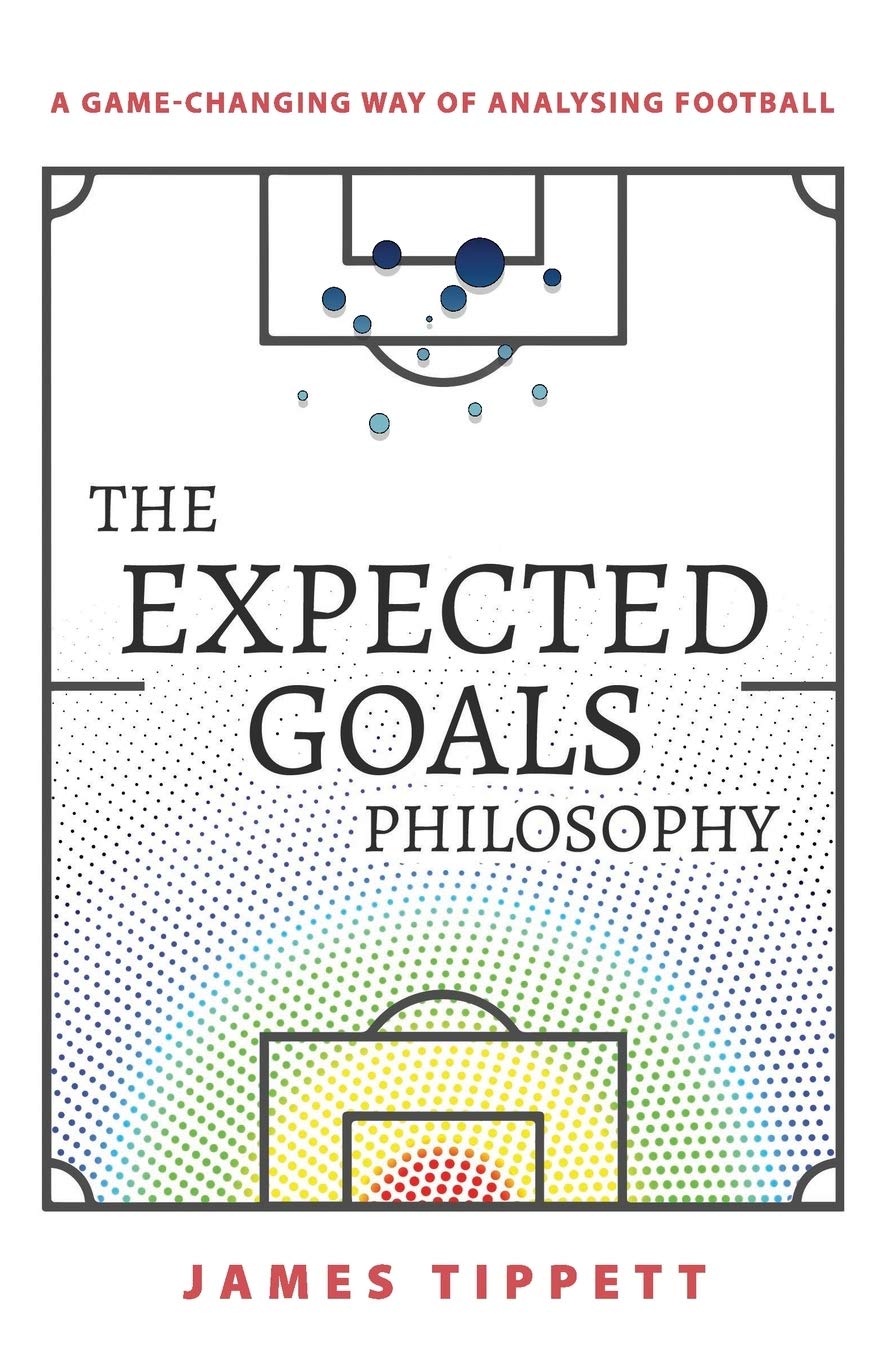
The xG Philosophy twitter account, which handily records xG from games across England and Europe, has nearly 150,000 followers and the person behind the account has even written a book.
I’m a massive fan of the metric, and I think it provides a great tool in order to analyse players and performances over a longer period of time, not just on a game-by-game basis. It allows us insight into who’s performing well, who’s got some luck on their side, and who’s in trouble in the long run.
But there does appear to be some misconceptions about xG.
It certainly isn’t the be all and end all of football performance analytics, something which seems to be missed when using the metric, particularly in the aforementioned book.
How is xG measured and what does it show?
So every time a shot is taken in a game, it is assigned an xG value between 0.01 and 1.00, with the higher the value, the higher the likelihood the average player would score the chance.
The score granted to each shot is based upon analysing thousands of similar shots across within a massive database and assesses everything from distance and angle, to strong/weak foot, to whether the assist was a high-speed cross or a simple pass.
At the end of a fixture we can add up these values in order to see the totals for each team or player. This is a simple way of measuring which team or player outperformed the other at face value.
We can use these analytics more effectively over the course of the season though, and you can use the xG metric to help determine how a team or player has performed when compared with their expected values.
Take Brighton and Hove Albion for example, the kings of xG.
In 28 Premier League games this season Brighton have scored 28 goals and accumulated 28 points, which leaves them in 16th place, just 3 points clear of the relegation zone.
However, their xG determines that they should have scored approximately 42 goals this term, and based on xG scorelines and expected points, they should have approximately 46 points, which would put them in joint 6th position.
This tells us that Brighton have been one of two things; either Brighton are horrendous in front of goal or they have been painfully unlucky. The answer probably lies somewhere between the two, but this analysis could provide the basis of an argument such as “if Brighton bought a more effective striker in, they’d be nowhere near relegation.”
This argument could then be backed up by referring to Neal Maupay’s xG values across his time at Brighton. In two seasons at the club he has scored 17 goals (which might not seem a bad return) but has returned an xG of just under 25 goals in that timeframe, meaning he isn’t scoring as many goals as would fairly be expected of him.
xG does usually level out over a long period of time, largely due to differing streaks of luck, and it is rare to see a player or team consistently under or over-perform (Messi aside) their xG.
So here we can see how xG provides a simple way of measuring which team or player outperformed the other at face value.
But the xG value doesn’t (and I cannot emphasise this enough) tell the full story of a game and xG works very well in conjunction with other determining factors, but much less so as a standalone.

What might we be missing by only using xG?
A huge incident that xG does not consider in the xG Philosophy book, is the position of a goalkeeper and the defenders.
So someone striking the ball into an empty net having rounded the keeper from 10 yards out, would be worth the same as if there keeper were present for a one versus one chance.
Likewise, a one versus one from the edge of the box would be worth the same value, even if there were 6 defenders between the striker and the goal. Alternative xG methods, such as that of Statsbomb, do count for goalkeeping position, so be wary of the source of your information when using xG.
Dangerous attacks that might end with a zipped ball across the 6-yard box, or a player being forced wide by intelligent goalkeeping and being unable to shoot, are also disregarded by the model. Unless there is a shot at goal, no value is recorded, no matter the danger presented, which can really skew xG scorelines.
Then there’s Chris Wood.
Looking back at the recent 1-1 draw between Burnley and Arsenal, we can easily identify why xG does not always correlate to performance.
The xG scoreline for this game was 1.1 – 2.54 in favour of the Gunners, so whilst Arsenal probably should have won the game, Burnley appear to have fully deserved their goal based on performance.
However, Chris Wood’s goal, which game from blocking an attempted Granit Xhaka pass across his own box, came completely against the run of play and wasn’t worked for by impressive Burley attacking, yet it contributed 0.44 xG to Burnley’s total, their most valuable effort of the game. Without this their xG would have been 0.66, which tells a much different story.
So dangerous incidents without a shot are given no value, whereas deflections like in the case of Wood, can add up to a massive amount of a team’s xG score.
This then shows you that whilst, yes xG can be a good indicator of performance, it doesn’t always tell the full story of a team’s play, and there is no true replacement for reviewing the incidents themselves, rather than as statistics.

The Expected Goals Philosophy book
I don’t want to go too far into this, but frankly, I would not recommend this book.
Whilst there are interesting points made throughout the pages (Expect Points and the Justice Table spring to mind), my issue with the narrative is threefold:
1. There is a large manner of disrespect towards the reader, and football fans in general.
Within the opening pages, you’ll find the following lines:
“The noticeable absence of a smart, analytical and scientific voice in the mainstream football media reflects onto he fans who follow such broadcasting. Stupidity breeds stupidity.”
“Readers who are disinterested in a more advanced study of the sport, or who are too entrenched in the ‘traditional’ outlook of the beautiful game will struggle with the contents of The Expected Goals Philosophy.”
“Soon, those who do not understand or pay attention to xG data will be left behind.”
Rather than try to be inclusive and understanding of the limitations of the xG model in the mainstream, the writer (James Tippett) is completely exclusive, and devalues the opinion of a large portion of football fans.
The author also makes out xG is the definitive method of reviewing football performance, and that all other metrics are secondary, which as we touched on early, isn’t really the case.
2. There is a tremendous amount of repetition.
I hope you like hearing about Arsène Wenger referencing xG in a post-match interview once, and Jeff Stelling going off on xG during a Soccer Saturday broadcast, because you’re about to hear about these incidents (amongst others) a LOT.
And speaking of repetition…
3. The book inadvertently promotes gambling and high-rolling.
Smartodds is a privately owned company providing statistical research and sports modelling services to professional gamblers.
Prepare yourself for Smartodds getting mentioned throughout, with lots of reference to how much money they have generated through statistical analysis and xG.
I’m not anti-gambling, and I don’t mind a small tipple myself, but in many places the book feels like an advert for Smartodds’ services, which could be dangerous in the hands of someone susceptible to gambling addiction.
I could write an entire review of the book, but that’s a story for another day.
So all in all, xG is a great metric to asses the performance of players and teams alike, but the metric cannot be used as a standalone and considering other factors is vitally important in effective use of the xG model.
Use it as a supporting player in your argument, rather than basing your entire premise on the metric and keep your eye on the xG of players and xG scorelines throughout the season, as you might end up uncovering some interesting trends.
 Thoughts of Tim