Italy’s abject failure at the hands of North Macedonia was well documented during the previous international break. Of all the ‘big’ team to fail to qualify for the World Cup, Italy’s disaster is right up there, and in modern times, with a full 32-team tournament, it is almost certainly the worst.
They are, after all, European Champions, and came into qualifying with a record-breaking winning streak, a deep pool in terms of player selection and a manager who has international pedigree and tactical nous.
Had Jorginho converted one of his missed penalties this conversation could be entirely different, but these things happen, and failure to beat Bulgaria at home and bloody Northern Ireland, were far worse mishaps.
However, they aren’t the only side you would have expected to qualify for the World Cup, so here’s a quick look at the teams who failed to qualify for the World Cup.
We’ll only be looking at the modern era of the tournament, which starts with the first 32-team tournament in 1998, so if you’re looking to laugh at England for 1994 (which was admitted very bad) or Italy for 1958, you’re in the wrong place, sorry.
1998 – Czech Republic
We start with 1998 and the Czech Republic side which really could have been something special. Often on the periphery of the top table in Europe, they were ranked third in the world and finished as runner-up at Euro 1996 but failed to make the finals.
The side consisted of functional players surrounding those who had that extra quality in their locker to get the edge over similarly-ranked teams. Patrik Berger, Vladimír Šmicer and Jiří Němec epitomised this ability but the real leader was Pavel Nedvěd, who could change a game instantly with a knife-edge pass or clever shuffle to create space for a shot, or to play in a teammate.
With Nedvěd in the engine room they really should have qualified for the first 32-team tournament but fell short due to a lack of clinical finishing in their qualifying group. How they would have wished for Milan Baroš or Jan Koller instead back then.
A pair of losses to FR Yugoslavia and the taking just one point from two games against Spain (who weren’t quite the same side we see nowadays) really set Czech Republic back. Ultimately though, a disastrous 2-1 loss to Slovakia (a game in which they were leading) meant they failed to qualify from their group, finishing 7 points off FR Yugoslavia and 10 off Spain.
The side would eventually have to wait until World Cup 2006 before they were able to showcase their abilities on the grandest stage. They crashed out in the group stage though, as a thoroughly attractive Ghana side advanced at their expense.
2002 – Colombia and Netherlands
The highest ranked team that failed to qualify for the first Asian World Cup was Colombia. Ranked fourth in the world at the time of the tournament they should have arrived at the tournament as 2001 Copa America champions but failed to get over the line.
Having qualified for the previous 3 tournaments, the golden generation of Colombian football appeared to reach it’s end at this stage as they would not re-emerge at the World Cup until 2014, where James Rodríguez blossomed in Brazil.
The team coming in 2002 had defensive capability with Córdoba and Yepes but just 20 goals in 18 qualifying games (4 of which came on the final day!) was telling, as they finished below Uruguay by a single goal difference, leaving the side ruing missed chances against Bolivia, Venezuela and Peru.
They also conceded a 93rd minute penalty against Brazil to lose, without which, they would have made it to the inter-confederation play off spot against Australia.
In Europe Netherlands met the same fate as Colombia.
Semi-finalists in both the 1998 World Cup and the 2000 Euros and spearheaded by their current coach, Louis van Gaal (now in his third tenure as Netherlands coach) the Oranje were one of the bankers to make the tournament, but things didn’t go to plan.
Netherlands set about destroying the smaller teams in the group as Ruud Van Nistelrooy, Patrick Kluivert and Jimmy Floyd Hasselbaink filled their boots against the minnows of Estonia, Cyprus and Andorra. Hell, even Mark Van Bommel managed to score three goals in the group stage.
Their problem came against the sides who qualified however, as they drew once and lost once against both the Republic of Ireland and Portugal, each of which qualified for the World Cup without a single loss to their names. Total football was a total failure, and given the sheer wealth of talent available, failure to qualify was unacceptable, prompting the resignation of Van Gaal.
The Dutch would reappear in 2006 under Marco van Basten, where they exited the tournament against Portugal, in the infamous ‘Battle of Nuremburg.’
2006 – Cameroon and Nigeria
In 2006 CAF qualification went full weirdo-mode and gave us a truly tremendous selection of teams; Angola, Ghana, Ivory Coast, Togo and Tunisia all qualified, meaning the traditional double of Nigeria and Cameroon, who had led the way on the global stage for so long, were left to watch the tournament at home on TV.
For what its worth, Egypt also missed out on the 2006 tournament despite winning the AFCON in the January of the same year and Senegal, who were surprise quarter finalists in 2002, failed to make the cut too.
Now, CAF qualification was (and remains) really tricky, as only the very top team from each group would qualify for the World Cup at this time. Both these sides finished second, in different fashion.
Cameroon beat eventual group winners Ivory Coast home and away, including a 3-2 victory in which Pierre Webó scored a scorching hattrick to drag his side to the win. The problem for Cameroon however was that these were Ivory Coast’s only losses, and their only other dropping of points came in a draw against Libya.
Cameroon likewise drew with Libya, but they also drew against Sudan, which was a massive disappointment. The real crux of the matter however, was that Cameroon failed to beat Egypt, losing once and drawing once, whereas Ivory Coast, powered through by Didier Drogba, did the double over the AFCON champions.
The side featured Rigobert Song, Geremi and of course, the legendary Samuel Eto’o; the latter of which is his country’s greatest ever player, possessing the most blistering pace and ability to finish on both feet. This firepower wasn’t enough mind, and the side would be forced to regroup and reappear in South Africa for the 2010 edition of the tournament.
Whilst Cameroon were downed by a prime generation of Ivorian talent, the same could not be said for Nigeria in group 4.
In a side littered with stars such as Mikel John Obi, Taye Taiwo, Obafemi Martins, Nwankwo Kanu and the greatest player of all time, Jay-Jay Okocha, finishing in second place to lowly Angola was an embarrassment.
The Super Eagles smoked their way beyond a few sides, putting five goals past Algeria and Zimbabwe respectively, but draws against Gabon and even bottom-finishing side Rwanda would hold the side back immensely. The final table saw the side level with Angola on points, but due to a worse head-to-head record (Angola beat them 1-0 and the other game was a 1-1 draw) the Nigerians finished second and crashed out before the big tournament even started.
Perhaps the African side that had most become ‘part of the furniture’ at this stage, the nation missed their first World Cup since 1986 and have yet to hit the same heights of the 1998 side which made it to the quarter finals.
2010 – Croatia
Ranked 10th in the world at the time of the tournament, Croatia were one of the European sides that people considered a dark horse on the continent.
Having qualified for the previous three tournaments, with a third place finish secured in 1998, and going from strength to strength under Slaven Bilić it was therefore a fairly big shock when they failed to make the tournament finals.
The squad featured all manner of quality, and their story is heavily akin that of the Czech Republic side discussed earlier. They had the talismanic duo of Luka Modrić and Ivan Rakitić pulling all the strings in midfield, both of which would inspire the side to victory on a game-by-game basis. Elsewhere, you had Srna, Ćorluka, Pranjić, Kranjčar, Olić, Klasnić and Eduardo, all of which are sure to spark joy as anything from fun players, to bonafide club legends.
Finishing third in their group to Ukraine and the perhaps the best and most ruthless qualifying England side ever, Croatia finished a single point off second, largely due to conceding 13 goals in 10 games, when compared with just the 6 of the defensively-sound Ukrainians.
Despite heavy a 4-1 (remember that Theo Walcott performance?) and 5-1 defeat to England, Croatia had the upper hand coming into the 9th matchday. Ukraine though, would pull magic from the fire and defeat England 1-0 due to a Serhiy Nazarenko goal, putting themselves in pole position, which they converted with an expectedly-emphatic 6-0 victory over Andorra on the last day.
This omission feels even madder in retrospect, given the stature of the Croatian side nowadays, having made it to the World Cup final in 2018, losing a barn burning event to France 4-2 in the biggest game in the country’s history.
2018 – Netherlands, Italy, Chile and USA
After a fairly formulaic qualifying campaign for 2014, 2018 went turned shit up to 11 with four teams you might have had nailed on to for participation falling short.
In Europe, it was carnage.
First to fall was the Netherlands, who had been on a slow decline to this point, but few had expected missing out on the World Cup, especially without even making the play-off round. Drawn in a group with eventual world champions France, and the difficult-to-beat Sweden, on paper it looks excusable that they narrowly missed out on goal difference.
However, when you investigate the manner in which they went out, one can only laugh. A 2-0 loss away to Bulgaria put the breaks on things, but coming into the final weeks the Dutch knew that they had a chance to qualify if they could put a few goals past Sweden. With a lead on goal difference, it was important that Sweden didn’t beat Luxembourg too convincingly, and Dick Advocaat shared the same sentiment.
“But what if Sweden win with like 8-0 against Luxembourg?” asked one reporter.
“They won’t win 8-0, what a stupid question that is,” Advocaat said. “8-0? Well, no I don’t believe that.”
Well, guess who won 8-0.
Sweden burnt the barn down against Luxembourg, with Marcus Berg bagging four, almost as if Advocaat’s words had gifted them magical goalscoring powers. Barring a 7-0 Dutch victory on the final day, Sweden had booked their place in the play off round; Arjen Robben’s double in Amsterdam Arena ended up meaning very little, and despite a 2-0 defeat, Sweden sailed through.
Speaking of Sweden, they are also part of Italy’s embarrassment. (How about that for plot armour, sports fans?)
Italy can certainly be excused for not topping their group. They were, after all, paired with the formidable Spain, who were back to winning ways following a disappointing campaign in Brazil. There were a few dodgy games in there, namely against North Macedonia (if you can believe it) and one against Albania.
Then came the play off matches, and Sweden. In the first leg, Sweden secured a savvy 1-0 win, frustrating the away side – Italy were on the back foot, but they weren’t out of it, not by a long shot. Surely Italy would score at the San Siro, with the roar of the home support behind them?
Well, with 20 shots and 76% possession to their name, Italy could simply not break through. Sweden stood tall and former Wigan Athletic defender Andreas Granqvist played an absolute blinder, commanding his back line perfectly and making a number of crucial blocks.
The night ended in tears for Italy, largely due to the tactical ineptitude of Gianpiero Ventura who played 5 defenders, despite the side needing to push forward and score to level the tie. The creative forward Lorenzo Insigne, well he didn’t even get on the pitch…
Italy missed out on their first World Cup finals since 1958, making this disaster only their second ever failure to appear on the big stage. Well, at least they would be back in 2022, and better than ever!
The disappointment of Gianluigi Buffon of Italy and the teammates at San Siro Stadium in Milan, Italy on November 13, 2017.
(Photo by Matteo Ciambelli/NurPhoto/Sipa USA)
Over in South America, 2015 and 2016 Copa America champions got off to the best possible start to qualifying for the 2018 edition of the tournament. With goals from Vargas and Sánchez they brushed aside Brazil at home and immediately distilled fear into their fellow qualifiers, showing the meant serious business. Then in matchday 2, they edged Peru 3-4 in Lima, giving them another boost in confidence.
A draw against Colombia followed but the wheels really came off away to Uruguay in a crushing 3-0 loss. Further sloppy defeats to Argentina, Paraguay, Ecuador and even Bolivia (who finished second bottom in qualifying) meant they were just too far behind the 8 ball and despite winning more games than Peru, they were squeezed out on goal difference. The real kicker, losing 3-0 to Paraguay at home.
Whatsmore, Chile would have been out of it earlier had they not been awarded a 3-0 win against Bolivia, in a result that was overturned from 0-0. Bolivia fielded the ineligible player Nelson Cabrera, who had previously represented Paraguay and did not meet eligibility rules, which massively let Chile off the hook.
Still, the double Copa champions could not make the grade. Would they have traded one of those cups for a place at the World Cup? I very much doubt it, but missing on a golden chance surely must have stung players and fans alike.
If Chile were bumbling, and Italy and Netherlands were embarrassing, the United States can only be described as the kid who pissed their pants in public.
In a 10-match qualification group, they won just three times, against Honduras, Trinidad and Tobago and those who qualified in their place, Panama. Away from home, they failed to secure a single win, and eventually finished not just outside the top three automatic qualification spots, but in 5th (of 6), missing out on the inter-confederation play-off spot too, which was instead taken by a lackluster Honduras.
Headed up most of all by the legendarily-crap Bruce Arena, the team clearly had no idea of what the tactical plan was, running around like children, without the quality to drag the side through the tougher (or even not tough) games.
All that said, they actually had destiny in their own hands coming into the final day but wins for Honduras against Mexico and Panama against Costa Rica respectively meant that their horrific loss to Trinidad and Tobago saw the United States crash and burn, which nobody, and I mean nobody found funny in any way at all.
It spelled the end of an era for the national team, who missed out for the first time in 32 years, with personnel changes taking place both on and off field following the great pissing of the pants incident.
So Italian fans, whilst yes, not qualifying for the 2022 World Cup was bad, it could always be worse. Or could it? You tell me.
Everton qualified for the 2017/18 Europa League thanks to a 7th place finish the season prior under Ronald Koeman. Despite Romelu Lukaku leaving for their record fee ever received, things looked good for the season as they instantly won the transfer window trophy, due to their excellent business in the window.
However, it has been entirely (outside of a fun season under Marco Silva) been downhill since then. The club has been dreadfully mismanaged, both on and off the field, and for the first time since the David Moyes era, they are not just flirting with relegation, but swiping right, taking it our to dinner and ordering the most expensive champagne on the menu.
Here though, is the squad that competed in the beginning of the end, and where they are now…
But first, managers!
Ronald Koeman – Manager – Netherlands National Team
Big Ron the second is not so fondly remembered at Goodison Park despite the aforementioned 7th place success – in fact, come to think of it, it’s difficult to remember a club where the once free scoring defender is affectionately looked back upon.
After leaving Everton in the relegation zone he took over as manager of his native Netherlands and had a successful time, re-building the side which had shockingly missed out the 2018 World Cup due to Sweden putting 8 goals past Luxembourg, despite Dick Advocaat’s prediction.
Ronald had a clause in his contract where he could leave for Barcelona should they come calling, and leave he did. In dire financial straights Barca took on Koeman and he guided the side to a third-place finish, whilst promoting a number of young players to the starting XI, including the insanely-talented Pedri. However, the season after he would be sacked due to a sluggish start and becoming the first manager since Patrick O’Connell in 1936 to lose three consecutive Clásicos, being replaced my Barcelona legend, Xavi.
Following Louis Van Gaal’s cancer diagnosis (get well soon Louis!), Koeman returned to the helm with the Netherlands, where he is yet to manage a game and has a tricky World Cup group to negotiate with Ecuador and Senegal in the mix.
Sam Allardyce – Manager – Free Agent
Big Sam was airlifted into the situation following Koeman’s departure; the side were 13th, having recovered some groud following Koeman’s dismissal, but there was still a lot of work to do.
Allardyce set about doing what he does best, installing a pragmatic footballing philosophy and working on the defence, which was quickly shored up. He actually managed to guide the club to a good finish of 8th place, but the turgid football was too much of a sight for sore eyes, and he left the club at the end of the season. Some might think the club were ungrateful in that case, but whilst under Allardyce’s management, Everton were ranked 20th for total shots, 19th for total shots on target, 16th for passing accuracy and 17th for shots faced in the Premier League. If only xG was more prominent during this period…
Having been out of the management game for a couple of seasons, West Brom took on the big fellas services with the club stuck in 19th place. Despite an insane 5-2 win at Stamford Bridge being added to his CV, Big Sam also had to add the first relegation of his career, having previously worked wonders at Bolton, Sunderland and Crystal Palace.
He hasn’t managed since, and as the hottest free agent on the market perhaps he’ll pop up on AEW Dynamite to feud with Jon Moxley. Book it Tony!
Jordan Pickford – Goalkeeper – Everton
One of the most polarizing players in the game, one whom everyone seems to have an opinion on. Having joined Everton from Sunderland for a fee of around £23 million, a lot was expected of Pickford, and I think it would be fair to say he has largely lived up to those expectations.
A great opposition to snapshots and strikes that appear late, Pickford has a knack of pulling off good looking saves and possesses some excellent distribution, passing well along the ground and overhead to a head of any strikers. As such, he has cemented himself as Gareth Southgate’s number one choice between the sticks, having rarely let his country down on the biggest stages and being part of the best modern memories of many England fans.
He struggled for form last season under Carlo Ancelotti, and is susceptible to losing his head at times, but since Robin Olsen took the gloves for a few games, his form has been largely good. Even this season, with a horror show defensive line in front of him, he has been one of the better performers for the club, right up there with Richarlison. Should they go down, I don’t doubt that he would find himself another Premier League club.
Marten Stekelenburg – Goalkeeper – Ajax
Having left Ajax with almost 200 league appearances under his belt, it’s a little bit of a shock to think that Maarten Stekelenburg has never really found a happy home elsewhere.
After a couple of years at Roma he would join Fulham for around £5 million but failed to really get going, eventually being dropped by the madman Felix Magath in favour of David Stockdale. A loan to Monaco was unsuccessful, and a further loan to Southampton was slightly more fruitful, without tearing up any trees. In four years at Everton, who he joined next, he didn’t even manage 20 appearances, sitting on the bench in place of Jordan Pickford and has since returned to Ajax.
In fact, his best career moments almost certainly came with the Netherlands national team. He was the chosen one for the 2010 World Cup, in which Netherlands made an impressive run to the final, where they were defeated by Andres Iniesta’s extra time strike. Stekelenburg was a key figure in the side, making a number of strong saves and conceding just six goals throughout, two of which were penalties. So even with his stalled club career, he still managed to appear in the final of a World Cup.
Joel Robles – Goalkeeper – Real Betis
Joel Robles did some weird stuff at Everton. At the age of 22 he made the switch from Wigan Athletic to Everton alongside fellow Spaniard and former manager, Roberto Martinez.
Due to his age and his gangly frame he never quite looked the part as the last line of Everton’s defence, but after displacing Tim Howard as Everton number one, he started to repay the faith Martinez had in him with some good showings. One Martinez departure and a couple of gaffes later though, and Koeman dropped him, with Robles being replaced by the incoming Jordan Pickford.
At the end of his Everton contract in 2018 he moved to Real Betis and was largely used for cup and European competitions, with Pau Lopez starting in the league. However, after Lopez’s move to Roma, he became the full time smooth operator between the sticks and has since been replaced by Rui Silva or the veteran Claudio Bravo in Manuel Pellegrini’s exciting, growing team.
Leighton Baines – Defender – Retired
Leighton Baines was Trent Alexander-Arnold before full back assists were cool. He secured 53 of the bastards, making Baines the highest-ranking defender in Premier League history in that metric, with Trent hot on his tails with 44 at the time of writing. He could score too and was a real free kick wizard and efficient penalty taker.
Signed for the peanuts price of £5 million he became a legend at Everton, not just in his attacking ability, but in his levelheaded approach to defending. He was never the fastest, so he made up for it by taking up intelligent positions, and not flying into challenges which would leave him exposed running towards his own goal. That said he would get up and down well, possessing a great set of lungs and getting himself into positions to cross to Lukaku and Fellaini (amongst others who enjoyed his aerial service) through the years.
Baines would take home Everton’s Player of the Season award twice and appeared in consecutive PFA Team of the Year editions in 2012 and 2013. He retired in 2019 and has yet to reappear in football, likely instead putting time into music, which is another massive passion of his.
Michael Keane – Defender – Everton
One of the many signings made to bolster the side for the fight in the Europa League, Michael Keane is, sadly for Everton fans, still on the books at Goodison Park.
Having been nominated for the PFA Young Player of the Year award, it seemed good business when Everton picked up the sprouting English defender, but he would never achieve the level of expectation set for him. Despite being good in the air, Keane (and the viewing audience) quickly learned that there was a massive difference between playing at Burnley where defenders are set up for success and shortcomings are shadowed, and at Everton, who at the time were trying to play for expansive attacking football. Like when Taz moved from ECW to WWE or like signing a player from Atalanta, are they really that good, or do they simply benefit from the system they’re in?
He’s certainly had his moments in blue, earning some England caps in the times when he found consistency, but his decision making can be very poor, even making Harry Maguire look like Franco Baresi with his choices and composure. For reference see: this entire season.
Ashley Williams – Defender – Retired
Ah yes, the man who sparked the brawl, which sparked the man with the child to punch a player – how we remember thee well.
Charged with forging a partnership with the young Michael Keane, Williams was another who seemed to better suit the set up at his former club, Swansea City in this case. This would be typified by his frosty arrival at Goodison – that didn’t last too long though and Williams was at least a vocal part of the side, trying to organise players around him, sometimes to his own detriment. He was good with the ball in front or above of him, but as soon as someone escaped behind the line, it was game over, he simply wasn’t catching them.
After Everton he dropped to the Championship, joining Stoke on loan and then Bristol City permanently, before hanging up his boots in 2020. Nowadays he is a rather insightful pundit who will always be looked fondly upon as part of the odds-defying Wales team of Euro 2016; at that tournament he was a titan, and it was probably the last genuinely great period he had on field.
Phil Jagielka – Defender – Stoke City
Can you quite believe that Phil Jagielka is still playing football? Because I simply refuse to do so. He made his first team debut for Sheffield United in 2000(!) and was a revelation at the heart of defence there, being far and away their best player during the solitary Premier League season they had under Neil Warnock.
He would swap the red and white stripes for the blue of Everton in 2007 and quickly established himself as the number one centre back on the books. He would read the game well but had the acceleration needed to recover just in case he misjudged a move – plus, he could really play football. A great passer, he would often hit lovely long balls into channels to unlock wingers, and who could forget his rocket boot goal against Liverpool that time. He claimed Everton’s Player of the Season trophy twice, both in 2009 and 2015, and was given the captaincy of the club by Roberto Martinez; a true testament to his ability in the back line.
As his legs started to go a little, he returned to Sheffield United for a couple of seasons but struggled somewhat with gametime before joining Derby, and finally switching to Stoke halfway through this season where he somehow is still kicking at lovely old age of 39.
Eliaquim Mangala – Defender – Saint-Étienne
Mangala is one of those players that I believe was only ever a thing due to the FIFA Ultimate Team hype that surrounded him. He was signed from Porto by Manchester City for a whopping £32 million – which rose to £42 million in certain reports – and quickly proved that he was way, way out of his depth in a side such as Manchester City’s.
Quick across the ground, he would need that pace to recover from his many errors, and poor decision making. The Frenchman never looked sure of himself and could hardly compete for a starting spot as a result. A loan to Valencia looked to re-start his career, with him playing games again and finding his feet. Then he arrived at Everton on loan, ready to make a difference and show City what they were missing, but sadly in his second game he suffered a knee injury which would rule him out for the remainder of the season.
Following this, Valencia would pick up Mangala at the expiration of his Manchester City contract but he couldn’t re-find the form from his loan spell and he left on a free transfer this January to struggling Saint-Étienne, who have seen an uplift in results since Mangala’s arrival.
Cuco Martina – Defender – Go Ahead Eagles
Well, I’m obviously not getting through this write-up without mentioning that stone cold stunner of a goal against Arsenal, so let’s just get that out of the way first. After all, it is simply an incredible hit of a football, and on his first start for the club!
The Curaçao international fleeted around the Netherlands prior to landing with Southampton in the Premier League. He would follow Ronald Koeman to Everton at the end of his contract and in a similar vein, failed to turn up any trees for the club.
Stoke City would pick him up on loan after one season of failing to impress, followed by another quick jaunt to Feyenoord. When his deal ended at Everton, he moved to Go Ahead Eagles, where he continues to ply his trade. Yea, not much to say about old Cuco sorry, except hey do you remember that goal he scored one time against Arsenal?????
Séamus Coleman – Defender – Everton
Séamus Coleman has been at Everton for 13 years, 13 bloody years! And whilst Baines and Jagielka were tremendous value-for-money signings, Coleman is like the middle aisle in Lidl, the ultimate bargain haven, being purchased for a tiny £60,000 from Sligo rovers by then manager David Moyes.
The Irishman has been absolutely barnstorming for Everton throughout the years and provides a metronomic balance between defence and attack, often popping up in the final third with more than enough wherewithal to not get caught out on the break. He is also a key figure in getting the twelfth man involved in the game, with his big tackles and passion getting Goodison to roar time and again. Coleman’s abilities were most recongnised in the 13/14 season, whereby he made his way into the PFA Team of the Year, a monumental effort for the lad from Killybegs.
Nowadays, his pace has reduced a great deal and the reality is that he perhaps should have been replaced a couple of years ago, but he still leaves everything he can on the pitch, without fail – I don’t think anyone would be more upset than him should the side drop into the Championship.
Ramiro Funes Mori – Defender – Al-Nassr
Signed from River Plate for just under £10 million, Funes Mori was an absolute basket case of a defender, one whom you would not want to have to rely on in a pressure situation as he was prone to going completely off piste.
He was all-action to be fair to him, and would get through a hell of a lot of work when playing, forging a pretty food run in the side throughout the 15/16 season due to injury to Phil Jagielka and John Stones. In April that year he had quite possibly his most iconic Everton moment, kissing the badge as he trudged off the pitch following a red card for a nasty foul on Liverpool’s Divock Origi.
After his days in the Premier League he joined Villareal where he was in-and-out of the side which won the Europa League last season under the guidance of Unai Emery, before moving to current club Al-Nassr in the Saudi Professional League.
Mason Holgate – Defender – Everton
Following John Stones’ path from Barnsley to Everton, was Mason Holgate, who has been on the books at the club since 2015.
A promising young defender, Holgate is yet another case of a player who hasn’t met the anticipation set of him, and is now treading water in the Premier League – he’d be lucky to get his 500m badge at this stage. It hasn’t always been that way though, during his loan to West Bromwich Albion he was highly impressive, and looked streaks ahead of the attackers he squared up to in the league, often riling up opponents as he stole the ball from their feet. Plus, under Carlo Ancelotti he established himself as a safe and secure choice in the back line, or even in the base of midfield. His 27 league appearances in the 19/20 season a testament to the growth he had expressed.
With Rafa and now Lampard at the helm though he has massively regressed, back to his pre-West Brom days and looks diluted on confidence. Perhaps a run in the side alongside Yerry Mina (should he ever be fit again) would revitalise the 25-year old, but that might well be wishful thinking and it feels time for Holgate to move on from Goodison.
Jonjoe Kenny – Defender – Everton
There is so much deadwood in the Everton squad these days. The fact that Kenny is still in the squad, and worse yet starting for the club, is testament to how poorly the club’s running and transfer dealings have been since their last European outing.
Kenny came through the youth ranks at Everton and he’s shown very short bursts of form since being promoted to the first team, having had to fight for game time both at Everton and whilst out on loan to Wigan, Oxford, Celtic and most-notably, Schalke. At the German club he actually looked like he was evolving as a player for the first half of the season, but as Covid hit the club went into a complete spiral. David Wagner was about as useful as a white crayon at arresting the slide.
He escaped back to Merseyside before the German giants were relegated the following season, but any spark that had been lit underneath him had fizzled out by the time he touched back down in England.
Morgan Schneiderlin – Midfielder – OGC Nice
Another ‘what could have been’ case. Before he stagnated at Manchester United (where have we heard that one before?) Schneiderlin was tearing up trees at Southampton under Big Ronny Koeman, winning the clubs Player of the Season award in 2013.
Despite playing just 147 minutes for Manchester United in the 16/17 season, Everton and Koeman would pick up the Frenchman for a stunning £20 million, just £5 million short of what United had paid Southampton for his services, even given the lack of progression. Schneiderlin’s arrival however did align with an upturn in fortunes for the side, racing towards that successful 7th place finish.
A very handy passer and intelligent tempo player in the heart of a midfield set up, it was easy to see the value in Schneiderlin, but he was inconsistent and very often struggled to make an impact in bigger games where less of the ball would be seen. Personal problems kept him out of the side for most of the tenure of Marco Silva and he has since transferred to Nice where he has struggled for a starting place this term.
Theo Walcott – Midfielder – Southampton
Oh I’m fuming. I can’t believe I missed the chance to sell the headline ‘Three-o Walcott’ to the newspapers when Walcott turned 30. It was definitely a good idea…
Now that reference is boxed off and out of the way, anyone else seeing a whole heap of connections between Everton and Southampton; it seems the Ev take a whole load of trash from the southern club, but in this case, it’s clearly the other way round. Walcott was, on his day, disgustingly good. Known mostly for his pace, he was also a very good finisher and scored a boat load of goals for Arsenal over the years – his decision making and composure was always questioned, but it would be harsh to say he wasn’t genuinely great under Wenger.
When it came time for the move to Everton though, most of what made Walcott so special had dissipated, and what remained was the carcass of a once terrifying player for defenders to come up against. In his loan to boyhood club Southampton last year he managed to make a real impression and looked tremendous at times. Since the permanent deal was sealed though, he’s fell away again, and is struggling to get game time under Ralph Hasenhüttl.
James McCarthy – Midfielder – Celtic
As Roberto Martinez assembled a School of Rock-esque Wigan reunion within his squad, there were a few suspect signings, namely those of Arouna Koné and Antolín Alcaraz. On the flipside though, you had the criminally and constantly underrated James McCarthy, who was exactly the sort of hard-working, all-action midfielder Everton needed at the time. Come to think of it, they need that right now too.
Joining for £13 million (the second most expensive deal in Everton history at the time) McCarthy slotted into the midfield brilliantly as he provided a perfect base to the team alongside Gareth Barry. Neither would allow anything past them easily, and McCarthy made up for the lack of speed Barry had, whilst Barry would play an exceptional range of passes in comparison to McCarthy’s more simplistic, yet effective, style.
Injuries mounted up at the back end of his Everton career, including a nasty leg break whilst blocking a Salomón Rondón shot against West Brom. As a result of less game time, he swapped Liverpool for London, playing quietly well for Roy Hodgson’s Crystal Palace. Now he’s at Celtic, mostly on the bench, but he’s been a great player wherever he has gone and deserves some plaudits as he winds down his on-field career.
Idrissa Gana Gueye – Midfielder – PSG
Idrissa Gueye is a really, really good footballer. He’s the Guinness Extra Cold to N’Golo Kante’s regular Guinness – not quite as good, but still a damn treat. I could drink the black liquid and watch Mr. Gueye play football all day long.
Of all the players on this list, Gueye is the only one you could say has certainly gone onto bigger and better things as he is often the anchor the keeps the ship from capsizing in an incredibly attacking PSG side. Defensively he is as good as they come, ranking right up there with the likes of much-revered Kante and Ndidi in terms of Premier League tackles, interceptions and ground covered.
Prior to his move to the French capital he won Everton’s Player of the Season award (shared with Lucas Digne) but would soon add genuine trophies to his cabinet. With PSG he has a league title and three cups under his belt, as well as a Champion’s League runner-up medal. Perhaps most notable though is the Africa Cup of Nations trophy he won this very year; he even scored in the semi-final against Burkina Faso, a moment I doubt he will ever forget.
Gylfi Sigurðsson – Midfielder – ???
I’m not going to go into any write-up here; we’re all well aware of the legal issues surrounding Gylfi Sigurðsson and what happens to him, and his career, next remains to be seen.
Davy Klaassen – Midfielder – Ajax
Whack Davy on the list of Eredivise transfers that didn’t work out. Preferably place him on the list right between Jordy Clasie and Alireza Jahanbakhsh, the three gruesome horsemen of ‘this guy will be brilliant in the Premier League, no doubt about it.’
Klaassen looked to have all the accoutrements that a player needed in order to make it in the big leagues. A creative central midfielder, Klaassen has an eye for a nice sliding ball behind defenders and a keen eye for goal, scoring some important ones throughout his career. He could also press well, being part of the Ajax school-of-thought. In reality his Everton stay was an atrocity, he played just 7 league games and come the end of the season, wasn’t even in the conversation for starting a match in blue.
The fact Everton managed to recoup half of the £34 million they paid for the Dutch playmaker was a minor miracle in itself. Werder Bremen picked him up and he showed some of the talent many expected him to present in England. He returned to Ajax at the start of the 2020-21 season and has been great back in the Netherlands, scoring goals from the centre of the park and seemingly enjoying is football again.
Tom Davies – Midfielder – Everton
Tom Davies is, sadly for Tom Davies, just not that good. Having started like a house on fire, being a ball of kinetic energy bustling through the midfield, he has yet to achieve anything close to what might have been hoped from him when he bolted from the blue. There was that one game against Manchester City where he tore up the town, but outside of that, he has done very little.
A central midfielder, Davies seems to fill in this position as he doesn’t have the specific skills to succeed in either a more attacking or defensive role – he is just mildly adequate at everything. A real 5/10, 2.5 stars, white bread without the butter kind of player. Am I being too harsh? Perhaps, but hyperbole sells, and more dedicated Everton fans can fill you in on the rest.
Should Everton drop down to the second division, Tom Davies is one of those players who I just cannot see escaping. Should they survive, they’d be mad to renew his contract following its 2023 expiry date, but much, much barmier things have happened in the Moshiri-era.
Nikola Vlašić – Midfielder – West Ham United
I really don’t enjoy when fans criticise a club for selling a player who performed better elsewhere. Some players just blossom in certain conditions, especially out of the direct limelight, and many would not have thrived without moving; De Bruyne being sold by Chelsea is always my prime example. Nikola Vlašić is one of those cases where the player just got away from the club, and a great player was unlikely to develop in the set conditions.
As such, Vlašić was loaned to CSKA Moscow, which turned into a permanent move due to his string of impressive performances. His directness from a wide position and ability to get into intelligent positions in the box led to several goals (33) and assists (22) for the club. Included in that was the sole finish in a famous 1-0 victory over Real Madrid in the Champion’s League, and an assist in the return leg 3-0 victory, Madrid’s heaviest ever home loss in the Champion’s League.
His relationship with CSKA would break down due to the club’s reluctance to sell him, with a move to West Ham eventually being forced. He’s started fairly slowly but will adapt soon enough and I imagine he will be a more important part of David Moyes’ squad next season, especially if the MASSIVE hammers qualify for the Champion’s League through a Europa victory.
Yannick Bolasie – Forward – Çaykur Rizespor
If you don’t like watching Yannick Bolasie play football, I don’t know what to tell you, but maybe you need to find a new sport. Is he the best? Not by a long, long shot. Is he insane and fun and does loads of cool tricks? Yes, a thousand million times yes.
Rising from the very bottom of the football pyramid to become a Premier League starter, Bolasie always had that special something, but it was at Crystal Palace where he transformed the magic into genuine goals and assists. His impressive performances and eye-catching skills earned him a £25 million move to Everton where he started quite well but a huge ACL injury put him on the shelf for almost the entirety of his Goodison career. Even when he returned, it just wasn’t the same sadly.
Loans ensued, to Villa, Anderlecht, Sporting and Middlesbrough, featuring to differing effect for each club. When his five-year Everton contract came to a finish in 2021 he moved to Turkish side Çaykur Rizespor who sit in the relegation zone coming into the final furlongs of the season.
Wayne Rooney – Forward – Retired
The Premier League’s second highest all-time goalscorer returned to where it all started in 2017. Having filled his trophy cabinet with Manchester United and become England’s top scorer there was very little left for Rooney to prove when he stepped back out in blue at Goodison Park, but to be fair he didn’t come back to relax, and weighed in as much as his body would allow for the side.
At the peak of his powers, especially before his 2010 injury, Rooney was unplayable. An insanely good finisher who would get involved in the build up play before Harry Kane made it cool, he was a complete menace to defensive society throughout his playing days. Something that was always underrated too was the raw pace of the man, when he got going, he was like a bullet train, even with his slightly larger frame.
Following his time at Everton Roon-the-bloody-mad-loon would have an amazing time at D.C. United, which was just filled with mad goals and fun happenings; like the time he sprinted half the pitch, made a sliding tackle and then pinged a perfect ball into the box to assist a last second equalizer. Finally came his Derby County stint, whom he now manages. Despite being relegated from the Championship just recently he has done a great job with the club and its young players as the side was condemned by dreadful ownership, not on-field displays.
Cenk Tosun – Forward – Beşiktaş
Allardyce’s wonderfully woeful winter signing. Cenk Tosun cost Everton £27 million(!) when he was snapped up to in January of 2018 with the hope that he would provide the much-needed goals which Everton had been missing throughout the season. Having been a goal machine in Turkey, it was hoped that his talents would translate to the much more challenging life of the Premier League – they did not.
Lacking in both physical ability and killer instinct, he was never going to be good fit in the division and ended up becoming a huge deadweight, draining on the club’s wage budget and drawing the ire of fans. Seriously, if you ever wanted to catch what apathy sounds like, tune into an Everton home game where Cenk Tosun is summoned from the bench to save the day.
A quick loan to Crystal Palace was cut short by injury, and he’s now back at Beşiktaş where he’s scored 3 in 3 according to Transfermarkt, if you can believe it. Tosun’s contract runs out at the end of this season and he will almost certainly not be renewed by the club.
Dominic Calvert-Lewin – Forward – Everton
Everton’s main striker nowadays was simply a blossoming young boy back in the day – little could we have known that he would one day be a star of GQ Magazine and play for England when he was being forced to play right wing back against Stoke under Ronald Koeman.
Calvert-Lewin’s rise to prominence was not one of speed and style but one of hard work and persistence and he is now clearly Everton’s line leader alongside Richarlison. Great in the air due to his size, he’s also a good snapshot finisher and can bundle attempts over the line due to his positional awareness. He’s not the fastest, but he doesn’t need to be, operating well as a more traditional English figurehead striker. His form has dipped recently, but he has the skills to regain his mojo before too long.
Whether that is with Everton or not remains to be seen, and based on some of his performances lately, those suggesting his head may have been turned away from Merseyside might be onto something. If Arsenal (for example) come knocking, I would expect him to move on, for a tidy fee too.
Oumar Niasse – Forward – Burton Albion
A fitting end to this list. Oumar Niasse was treated awfully during his time at Everton, especially under Ronald Koeman. He was stripped of his shirt number, forced to train with the under-23s and wasn’t even given a locker at the training ground. He must have been thrilled beyond belief when Koeman left.
Even when he got on the field though, Niasse couldn’t replicate his Lokomotiv Moscow goalscoring form, which made Everton pick up the Senegalese forward for £13.5 million. He’s quite a clumsy player unfortunately and is blessed with a poor first touch, meaning that unless is to be charging into space, possession will likely be lost. This also makes him easy to defend against, obviously, and he likely was out of his depth in the Premier League.
His Hull City loan was okayish, but his Cardiff one was much worse – he couldn’t muster up a single goal for the club. Now he’s down in League One at Jimmy Floyd Hasselbaink’s Burton Albion, who have little to play for in this final stage of the season.
With the African Cup starting this week there is a huge opportunity for scouting networks and clubs to discover a new gem from the continent.
Since the turn of the century many of the tournament best player’s have made their mark in Europe’s club game and beyond, with a great portion developing into household names.
There have been 11 Africa Cup of Nations this century, and here’s a rundown of the Player of the Tournament from each edition of the cup, and where they are now.
2000 – Lauren (Cameroon) – Broadcaster
Winners: Cameroon | Hosts: Ghana/Nigeria | Top scorer: Shaun Bartlett (South Africa)
We begin with the millennium tournament, won by Cameroon after prevailing over Nigeria in a penalty shoot out in the final. Lauren was selected as the player of the tournament, and whilst he’s often known as a full back, he operated in midfield for the eventual champions.
In that summer, he would join Arsenal from Mallorca. Having quickly established himself as the number one right back at the club, Lauren would win a pair of Premier League and FA Cup trophies under Arsene Wenger.
Cool on the ball with some of the strongest dribbling on any full back at the time (hence his ability to play in midfield), and even a decent strike on him. Lauren was most known for his lightning pace in the recovery and solid one-versus-one tackling. All these traits served his perfectly as part of the 2003/04 Invincibles, etching his name into the footballing history books forevermore as a result.
Following Arsenal, he joined Portsmouth, where he was part other another fairly formidable defensive set up, adding another FA Cup to his trophy cabinet too. He returned to Spain after this, retiring in the country for which he has dual nationality, and taking up roles in broadcasting, mainly covering La Liga matches.
2002 – Rigobert Song (Cameroon) – Manager
Winners: Cameroon | Hosts: Mali | Top scorer: Julius Aghahowa (Nigeria)
Cameroon’s leading appearance maker, Rigobert Song helped his nation to a consecutive penalty shootout victory, getting his hands on the trophy for a second time despite missing his spot kick in the contest. Having seen off Senegal in the final, he beat out the likes of Seydou Keita, El Hadji Diouf and Julius Aghahowa to the induvial award.
Song is well documented as being the first Cameroonian player to ever feature for Liverpool and the summer after the tournament he would leave West Ham for Köln on loan, prior to a permanent move to Lens.
A fair passer of the ball, Song was revered for his leadership qualities and ability to lead a strongly structured defence; perhaps epitomized by his nickname, ‘Big Chief.’ He’d also denied a great deal of aerial traffic, making him a versatile partner at the heart of a back four.
Following a couple of years in France, he would move to Turkish giants Galatasaray, for whom he would play over 100 games, winning two Super Lig titles and one Turkish Cup. Song would move to Trabzonspor after this and would retire before moving into coaching. He’s been at the heart of the Cameroonian set up since and is currently overseeing the under-23 side, having overcome life threatening illness in the past few years.
Fun fact, alongside Zinedine Zidane, Rigobert Song is the only player to be sent off in two separate World Cups and is the youngest player to ever be sent off at the World Cup, being just 17 when he saw red in 1994.
One of the greatest players to ever lace his footballing boots, and the player who made me personally fall in love with football, remaining my favourite ever player to this day. Jay-Jay Okocha was the most skillful of geniuses, able to pull off the most elaborate and extravagant tricks you’ll ever see, outside of maybe Ronaldinho.
He would immediately challenge players, pushing even the most chiseled backwards, creating space for his centre forward from high wide positions. Freekick and crossing wise he was also very strong, providing a great number of assists throughout his career.
Despite Tunisia claiming the trophy on home soil, Okocha had a marvelous tournament, finishing joint top scorer on 4 goals, having carried the Super Eagles to third place.
At the time of the tournament, Jay-Jay had already landed at Big Sam’s Bolton, which was a massive coup given Okocha’s credentials beforehand at both Frankfurt and PSG. Little did we know however, he would fail to ignite another club in the same manner and would quickly wind his career down with stints at Qatar SC and Hull City.
After hanging up his boots he’s done very little aside from feature in regular charity matches, usually in Bolton. Maybe he could teach his nephew, Alex Iwobi, a few new tricks…
2006 – Ahmed Hassan (Egypt) – Retired
Winners: Egypt | Hosts: Egypt | Top scorer: Samuel Eto’o (Cameroon)
With the tournament on Egyptian soil for the first time in 20 years, there was no greater time for Egypt to begin their legendary run of African Cup dominance.
Despite being a team lacking in real continental ‘superstars’ such as Eto’o, Okocha or Drogba, Hassan Shehata maximized the solidity and functionality of the squad, becoming their greatest manager ever by some distance.
There was some serious quality in there too though; Amr Zaki, Mido and Mohamed Zidan spring to mind for example – but Ahmed Hassan was a cut above. Having fleeted around Egypt, Turkey and Belgium in the club game, he never really made as much of a splash as he would maybe hope, despite scoring goals wherever he went.
Hassan was a different beast on the international stage though. The attacking midfielder would be at the heart of everything creative for Egypt; picking delicate passes through the lines and providing much needed shadow striker support to the centre forward. And all of this was before the Mohamed Salah days, of course.
His record 184 Egyptian appearances (which puts him 3rd on the all-time international list) epitomises the importance he had on not only the 2006 winning side, but the 2008 and 2010 ones too. And in fact, Hassan would win this award again in 2010, bookending the trifecta of titles for the most dominant side in AFCON history.
Nowadays, he’s mostly resting due to playing that many games I would imagine, having only dipped a toe into management in 2015.
2008 – Hosny Abd Rabo (Egypt) – Retired
Winners: Egypt | Hosts: Ghana | Top scorer: Samuel Eto’o (Cameroon)
Given the cagey nature of the 1-0 final victory over Cameroon, you’d be forgiven to thing that Egypt defended their way to a second title in a row, but the 2008 AFCON was anything but.
With 99 goals being scored throughout the competition and some crazy results, this was perhaps the most exciting Africa Cup of Nations ever. Coming into the showcase, the hot favourites were either Ghana, led by Michael Essien on home turf, or Ivory Coast, who had a disgustingly stacked squad. Egypt and Hosny though, had other ideas.
Having spearheaded the side through the group stage, Hosny operated largely as a box-to-box playmaking midfielder, breaking up attacks before spreading the ball wide and charging forward to weigh into offensive plays. Known for his powerful striking, he was part of 6 goals at the tournament (4 goals, 2 assists).
Whilst they won the final, Egypt’s crowing moment truly came when they annihilated Ivory Coast 4-1 in the semi final stage – a result which very few could have predicted despite the Egyptian’s being reigning champions.
Hosny rarely ventured outside of Egypt in his club career, and is considered Ismaily legend given the massive number of games he played for the club before retiring from football aged 34.
2010 – Ahmed Hassan (Egypt) – Retired
Winners: Egypt | Hosts: Angola | Top scorer: Gedo (Egypt)
Christopher Katongo, Hervé Renard and Zambia triumphing over the golden generation of Ivorian players, is really what the AFCON is all about. Despite not conceding a single goal in the tournament, Drogba, Touré and company succumbed to an 8-7 penalty shoot out loss in the final against the most well orgainsed side in the competition.
Speaking of which, Katongo even beat some of the biggest African names of all time to the 2012 BBC African Player of the Year award, securing over 40% of the vote – no mean feat for a little known player who had never stepped foot into the English game, whereby most of the other nominees plied their trade.
Whilst Katongo wasn’t a relentlessly prolific forward, he scored an effective number of goals for country and club. He also had a nice change of pace about him, helping to push Renard’s side further up the field and forming an effective partnership with former Southampton man, Emmanuel Mayuka.
His club career has spanned Africa, Asia and Europe – with his most notable spells coming at Arminia Bielefeld and Danish giants Brøndby. He would retire in 2017 having amassed over a century of Zambian caps and has since been earning his coaching stripes, without having managed a professional club as of yet.
2013 – Jonathan Pitroipa (Burkina Faso)– Retired
Winners: Nigeria | Hosts: South Africa | Top scorer: Emmanuel Emenike
The switch to the odd year African Cups. Of all the AFCON tournaments I have watched, from Zambia lifting the cup to Egypt doubling down against the Ivory Coast, I don’t think there is a story I have loved wrapping myself up in more than Burkina Faso’s drive to the final. They came up a little short in a 1-0 final defeat to Nigeria, with tired legs and the missing Alian Traore (out with the thigh problem) meaning they lacked the similar high energy which accelerated them through the tournament.
Pitroipa was a mammoth force in this side. At the time a Rennes winger, his raw speed was effective on and off the ball, stretching defences with his charges in behind and beating wide defenders with his trickery and double-footed dribbling. He was never an amazing finisher, but with 2 goals at the tournament, he proved his effectiveness in front of goal.
In fact, Pitroipa was meant to be suspended for the final, having picked up a red card in the semi against Ghana, but thankfully the erroneous second yellow was overturned so the main man could feature for the Burkinabe.
He had an interesting club career too, having started out with Freiburg and then Hamburg in Germany, he moved to Rennes before cashing in on his twilight years in the UAE with Al Jazira Club, and then Al-Nasr. A very, very short spell with Antwerp followed before he wound his career down in France with Paris FC.
Having retired in 2021, he’ll go down as one of the players to shine so brightly on the AFCON stage, carrying a team that dared to dream further than almost all expected. He established a football school in Burkina Faso but whether he will take a step into professional coaching is yet to be seen.
2015 – Christian Atsu (Ghana) – Al-Raed
Winner: Ivory Coast | Hosts: Equatorial Guinea | Top scorer: André Ayew
Finally, Ivory Coast’s wavering golden generation got their hands on the African Cup, overcoming Christian Atsu’s Ghana in one of the dullest games of football I’ve ever had the privilege of witnessing. After 120 grueling goalless minutes, Ivory Coast won 9-8 on penalties, cueing the Boubacar Barry bum-shuffle celebration.
Atsu was sensational at the tournament, running with the ball at will and being given the freedom to dribble down the right hand side or move into the centre to support Appiah and Gyan, with the effective attack netting the most goals of any side at the 2015 edition of the tournament.
Atsu’s raw pace and trickery made him an effective signing at club level, but his inconsistencies with delivery and finishing prevented him from making a splash in the biggest leagues.
Having started his career at Porto, he made an unexpected and underwhelming move to Chelsea. As part of the loan army a successfully spell at Vitesse (as was tradition at the time) followed, but further loan deals with Everton, Bournemouth and Malaga were uninspired. Newcastle took a chance on Atsu though, and whilst he failed to perform very well in the Premier League, he did star in their Championship season, helping them to bounce back into the top division at the first time of asking.
In 2021 he moved to Al-Raed in the Saudi Arabian first division, where he has made a minimal number of appearances thus far, and aged 29, a return to the national set up looks ever more unlikely.
2017 – Christian Bassogog (Cameroon) – Shanghai Shenhua
Winners: Cameroon | Hosts: Gabon | Top Scorer: Junior Kabananga
15 years after Rigobert Song led Cameroon to their last AFCON title, Cameroon returned to the pinnacle of African football, coming from behind to defeat Egypt 2-1 in the final. This tournament was undoubtedly the dullest on the list; just 66 goals were scored throughout and Nigeria, who failed to qualify, were a big miss.
Of all the players on this list Bassogog was the one I knew the least about pre-tournament, but he set about showing me exactly what I was missing.
Operating on the right-hand side of midfield, he works best when cutting onto his left foot as an inverted wide player. Possessing a fleet of foot and effective change of pace, Bassogog is brutal on the counter, racing beyond defensive lines and finishing on both feet, often with a powerful strike through the ball.
Turning out for Aalborg in the Danish Superliga at the time of the tournament, Bassogog may well be the biggest winner on this list in terms of career trajectory, outside of Lauren. Chinese Super League club Henan Jianye purchased the relatively unknown player and he set about lighting up their games. Then in 2021, despite the Chinese football bubble largely bursting, Bassogog secured a move Shanghai Shenhua where he has started very well, having a goal involvement every other game.
He also remains a popular choice for the national side and has been selected for this year’s edition of the AFCON, whereby Cameroon will be hoping to secure a sixth trophy, keeping them in second spot, and moving them within one of the impressive Egyptians.
2019 – Ismaël Bennacer (Algeria) – Milan
Winners: Algeria | Hosts: Egypt | Top scorer: Odion Ighalo
Last but not least, the 2019 edition of the AFCON, and the first to feature 24 teams, following in the footsteps of the Euros.
The tournament was won by an exceptionally robust Algeria side, who conceded just 2 goals in the entire competition, neither of which were in the group stage or final, the latter of which was won 1-0 against Senegal, who incidentally also conceded only 2 goals. Mahrez was the creative star, but Ismaël Bennacer embodied the tenacity and quick transitional play which led the North Africans to the trophy.
Versatile in his approach within the side, Bennacer is tough in the tackle with an eye for an ideal pass to progress the play forward quickly, shown in his 3 assists at the tournament. His stamina allows him to charge up and down all game too, which was especially vital against a Senegal midfield featuring Idrissa Gueye and Badou Ndiaye. Bennacer also has a nice amount of technique on the ball, allow him to squeeze out of tricky spaces from time to time.
Having joined Milan from Empoli for around €16 million in 2019, Bennacer has been mainly utilised as a bit part player for Stefano Pioli’s side. Every successful squad needs this though, and Bennacer often provides some defensive steel in the centre of the park late in the game, helping Milan close out many a result.
Having previously been on the books at Arsenal, he seems settled in Milan and looks to be extending his contract in Italy, though I imagine he would consider swapping his role for more first team football, should the opportunity present itself.
2022
And just like that, off to Cameroon we go.
What you may have noticed throughout this list, is that the most talented or expected player doesn’t often win the Player of the Tournament trophy. There’s no Drogba, Salah, Mahrez or even Eto’o on this list, and players such as Okocha are outliers here – so could we expect to see taking home the individual award this year?
Despite the slow start to the tournament, you’d still have to look at the favourites list, and most strongly consider players from: Senegal, Algeria, Egypt, Ivory Coast, or the hosts, Cameroon.
Mohammed Salah and Sadio Mane are clear front runners, even despite the lack of superstar names on this list. At the moment, Salah is perhaps the best player on the planet, and Mane, whilst perhaps a little lower than his current standards, is a talismanic figure for his side, having netted a penalty in his first match.
Salah would therefore absolutely be my top pick, but André-Frank Zambo Anguissa, Idrissa Gueye and Jean Michaël Seri are all in with a good chance I would say, depending on which side makes the deepest run towards the trophy.
Regardless of the best side, or the best player, I would highly recommend watching as much of the AFCON as possible. The tournament has an entirely unique feel, the fans (which are capped at 60% for most games, and 80% for Cameroon ones) are absolute nutters for every match and you’ll be sure to discover a brand-new player to adorn as your new cult hero. Pascal Feindouno and Alian Traoré live long in the memory for me, and I’m excited to find a new little gem over the coming weeks.
In 2018, after 22 years in charge of Arsenal, Arsène Wenger’s managerial reign ended with a 1-0 away victory against Huddersfield Town.
During his time Wenger was responsible for revolutionary footballing advancements, including dietary changes, training regimes and scouting – all of which are now commonplace as Wenger’s legacy continues to echo across the globe.
Towards the end many Arsenal fans wanted better though, and after a few seasons of failing to challenge successfully for the Premier League title, voices were heard, and changes were made.
Since then, Unai Emery has come and gone, and Mikel Arteta now holds the keys to the kingdom, though his grip seems to loosen by the week. But as much as things change, things stay the same, and here is where Arsène Wenger’s final Arsenal squad are now.
Petr Čech – Goalkeeper – Retired
A Premier League legend for Chelsea, Čech was past his best when he arrived at Arsenal and mistakes which had started to leak into his game at Chelsea became increasingly prevalent in red meaning he was dropped for Bernd Leno the very next season. Following retirement in 2019 he’s now back at Stamford Bridge as a technical and performance advisor and played an interesting role in Chelsea’s Super League escapades, helping calm protestors outside the ground earlier this year.
David Ospina – Goalkeeper – Napoli
Colombia’s most capped player ever, David Ospina never completely nailed down a number one spot since leaving Nice for Arsenal in 2014. That said, he had some good moments in an Arsenal shirt, and was part of a few cup winning sides. Now at Napoli, he’s competing with Alex Meret game time, whilst still holding it down for Colombia. One more thing of goalkeeping note here though, a young Emiliano Martínez was waiting in the wings, yet to blossom into the star he’s become today.
Héctor Bellerín – Defender – Real Betis (loan)
I think it would be more than fair to say that Héctor Bellerín hasn’t quite achieved the next-level status many of us anticipated. Injuries took a huge toll on the man who looked to be one of the best full backs in the world in his earlier days and he’s now finally found a route out of London with Betis, whom his father actually supported when Hector was a child. Last season was a nightmare, epitomised by his many foul throws, but he is a sexy young man and is working hard towards delivering more sustainability in football, so there’s that too.
Shkodran Mustafi – Defender – Levante
World Cup winner Shkodran Mustafi arrived at the Emirates with a great deal of promise. Fast across the ground to recover and a good passer out of the back, which fit Arsenal’s style well, Mustafi felt like an effective signing at the time. In reality, he made high profile errors on the weekly, leading to him being scapegoated even when playing well. He left for the bin fire that was Schalke last season, and following their relegation he was picked up by Levante, with whom he’s already ran into registration problem, as they wanted to give him number 13, which is reserved for goalkeepers only in La Liga. He also has a very cool career trajectory: Everton > Sampdoria > Valencia > Arsenal > Schalke > Levante.
Sead Kolašinac – Defender – Arsenal
Another who joined Schalke (on loan) last season and had a truly rotten time. Relegated with a pathetic points total, Kolašinac was completely unable to assist in halting the sinking ship. The Bosnian international had some good moments in his early Arsenal stint but nowadays his body appears to have completely given up on him, and all in all it’s a pretty sad situation. He was expected to leave the club this summer, but wages seemed to be a stumbling block when looking for a new club.
Rob Holding – Defender – Arsenal
Signed on the back of a Player of the Year season with Bolton Wanderers, Rob Holding was thrust into the fire due to injuries to senior players and quickly found himself high up the pecking order under Big Weng. Still at Arsenal, he’s often in and around the starting line up without offering anything truly special, but is solid enough. Terrible trim though, the lad needs to get that sorted.
Per Mertsesacker – Defender – Retired
Another World Cup winner with Germany, on his day Per Mertesacker was one of the finest defenders around. Dominant in his own box, both in the air and on the ground, he had some incredible moments for the side – not least the 2017 FA Cup final victory where he stepped in with a monumental performance having appeared only once during the entire season. Never the fastest, the pace of the game left him behind during his final on-field days and having retired in 2018 he’s now managing Arsenal’s academy and being an all-round lovely guy.
Nacho Monreal – Defender – Real Sociedad
Having joined the club without much fanfare in 2013, Monreal would rack up almost 200 appearances for Arsenal and became a cult favourite – like a diet version of César Azpilicueta at Chelsea. He didn’t quite achieve those dizzying heights but was a reliable warrior nonetheless. He then joined Sociedad at the age of 33, being one of a handful of players who helped the young side develop into a real threat in La Liga, finishing in a tidy 5th place last season.
Ainsley Maitland-Niles – Defender – Arsenal
A versatile figure in the squad, able to play anywhere from wide forward, to central midfielder, to his now preferred position of wing back – things have stagnated for Maitland-Niles since his England call-up. A turbulent loan to West Brom failed to reignite fires and he finds himself on the periphery at Arsenal nowadays with a move to Everton being frimly blocked by Mikel Arteta, much to the young Englishman’s disdain.
Laurent Koscielny – Defender – Bordeaux
It was a real shame that Koscielny left Arsenal in a storm cloud as he was consistently one of the better centre backs in the Premier League throughout his time in England (let’s just not talk about that League Cup final against Birmingham) and even became Arsenal’s captain during his final years. Possessing great covering ability and decision making, he must have been a real pleasure to play alongside, with Mertesacker, Vermaelen and others reaping the benefits of Koscielny’s ability. Now at Bordeaux he’s slowly winding down his career.
Calum Chambers – Defender – Arsenal
Calum Chambers is a player I simply do not understand. He’s not quite a centre back in terms of physicality, and not quite a full back in terms of forward momentum – sometimes he plays a blinder and the very next game has a disasterclass. Loans to Middlesbrough and Fulham were largely indifferent in terms of quality and he remains in and out of Arteta’s floundering side.
Mavropanos never felt like a player who was set for any sort of opportunity at Arsenal, and so far that has proven correct. Having not even played 10 games for his parent club, Mavropanos is now in his second year of a loan to Stuttgart, who had a very successful first season back in the Bundesliga. This year, he is set to start most games again, and Stuttgart look an exciting side who could push into the Europa League spots with a bit of luck on their side.
Mathieu Debuchy – Defender – Valenciennes
A classic middling Premier League player, Mathieu Debuchy was a star for Newcastle and fully earned £12 million move to Arsenal, but the dream move rapidly became a nightmare. Injuries hit early and the emergence of Héctor Bellerín pushed him down the pecking order upon his returns, meaning he only managed a small package of games for the London club. A successful move to Saint-Étienne followed, where he actually bagged a tidy 10 goals in 78 games, and he’s now in Ligue 2 with Valenciennes.
Alex Iwobi – Midfielder – Everton
One of the Arsenal’s best ever sales, having fleeced Everton of almost £35 million (with add-ons) for Nigeria international, Alex Iwobi. I’ll be the first to admit I thought he’d be good for the Goodison club, but with just 10 goal contributions in 69 Everton games, he’s been a real waste. Lacking in pace, with poor decision making and an addiction to holding the ball too long, Everton fans will be hoping Rafa can transform Iwobi into a functional-yet-unexciting player at the very least.
Granit Xhaka – Midfielder – Arsenal
The ultimate catalyst for much toxicity around Arsenal since Wenger left the club. Xhaka has faced his fair amount of turmoil, with the stripping of his captaincy under Unai Emery being the most drama-packed, as he verbally battled back against an Emirates Stadium that booed him off the field. A move looked on the cards since summer following a quite fantastic performance with Switzerland at the Euros, but it wasn’t to be and Granit has already ticked a first red card of the season off his list, against Manchester City.
Aaron Ramsey – Midfielder – Juventus
The boy from Wales living the dream on mega-money in Turin, and fair bloody play to him. Aaron Ramsey was a real asset for Arsenal; driving forward from midfield with surging ball carries and doing a brilliant job of breaking lines to confuse defenders whilst also being versatile enough to drop back and get stuck into tackles. It’s a little bit of a shame to not see his very best form come into play at Juventus, but that’s largely due to managerial style, rather than his own ability – one to watch with the transition back to Allegri.
Joe Willock – Midfielder – Newcastle
Sometimes things just really work out when a player and a club get together, and whilst the relationship between Willock and Arsenal failed to bear fruit, the Newcastle connection is strong as you like. Scoring goals for fun with his Lampard-esque late bursts into the box, Steve Bruce made Willock’s loan move a permanent one this summer, with a hope that his dynamism and box to box style will contribute massively to Newcastle’s Premier League safety yet again.
Mesut Özil – Midfielder – Fenerbahçe
The fall of Mesut Özil has been so sad, but you have to agree that he’d played into, and perhaps orchestrated, his own demise. Inconsistency on the field and a seeming complete lack of desire to perform for the fans are probably what most of us remember his Arsenal stint for, so it’s hard to recall that he begun like a house on fire and was a fan favourite under Big Weng at least. Now winding down (very very quickly) in Turkey, the World Cup winner is a shadow of the creative colossus he once was.
Jack Wilshire – Midfielder – Free agent
Of all the arguably wasted talent on this list, none come close to Wilshere. Billed as a potential English Xavi, the lad felt ready dominate the game following his breakout loan with Bolton Wanderers but injuries would dominate every headline of his, missing a whopping 214 games of his career, whilst only managing 196 club showings. Promising moves to West Ham and Bournemouth couldn’t save him from the treatment table and he’s now supposedly training with Serie B side, Como. Oh, what could have been.
Mohamed Elneny – Midfielder – Arsenal
Elneny is one of those players who you just feel could do very well at a rung lower than where he currently resides. A middling German side would benefit from his running, and his ability in the tackle and short-range passing could see him thrive along a James Ward-Prowse type, for example. Yet he remains an Arsenal man, despite interest from Turkey, and definitely plays his better football for Egypt, with whom he has appeared at the World Cup finals.
Theo Walcott – Midfielder – Southampton
Here me out, I’m planning to sell the headline “Three Oh Walcott” to a tabloid newspaper when Theo Walcott turns thirty, and it’s a good plan. Under Wenger, Walcott forever felt ready to obliterate the glass ceiling and become a goalscoring legend akin to Thierry Henry – he had the movement and the pace, he even had the finishing, but his ability to make those all-important snapshot decisions, was non-existent. His Everton move was lackluster and he’s now back with boyhood club Southampton where he’s experiencing inconsistent success.
Francis Coquelin – Midfielder – Villareal
Remember when Francis Coquelin went on loan to Charlton Athletic, only to dominate an elite Manchester City side just a few months later – of course you do. Coquelin’s, let’s say, rough and tumble style, was embraced as he stood out in the Arsenal squad, but before too long he was out of favour yet again and a move to Valencia presented itself. Since then he’s switched Spanish side to Unai Emery’s Villareal, where he featured in the team’s historic Europa League victory over Manchester United.
Santi Cazorla – Midfielder – Al Sadd
My personal favourite player on this list by about a billion trillion miles. Cazorla was a mercurial beauty that shimmered at the centre of every side he played; with a gorgeous first touch, incredible dribbling ability and a passing range that could make even the very best jealous, he’ll always be fondly remembered by Arsenal fans. Disastrous injury looked to end his career early but a surprising return to Villareal rejuvenated the Spaniard, and now he’s deservedly enjoying one last payday at Al Sadd in Doha.
Henrikh Mkhitaryan – Forward – AS Roma
An Armenian legend with a storied career. Mkhitaryan arrived in winter as part of a deal which saw Alexis Sanchez move the other way to Manchester United, blowing up their wage structure in the process. Mkhitaryan wasn’t quite the disaster that Alexis became, but he failed to show his quality for the second time in England and swapped London for Rome where he has been exceptional, and a shining star of creativity, cool control and goalscoring in Mourinho’s new side.
Alexandre Lacazette – Forward – Arsenal
Half a century of goals at a single club would often be seen as a huge success for a player, but given the lack of consistency in his spell, Lacazette is usually overlooked as an elite forward. His best scoring season was his first and he has a good eye for goal, links to the midfield well and often looks comfortable playing off either foot. Overall, a hard Arsenal career to properly judge, and who knows, if the Court of Arbitration for Sport hadn’t blocked Atleti’s proposal for Lacazette in 2017, this story could be completely different.
Pierre-Emerick Aubameyang – Forward – Arsenal
From struggling to make a splash in the Milan youth set up, to bursting onto the scene in France and elevating himself even further than expected with BVB, the Gabonian captain has had quite the career. One of the fastest players I’ve even seen, with an instinctive sense for the goal and clever movement within the 18-yard box, he’s been largely fantastic in red and hopefully can return to form quickly following the turmoil of last season’s disciplinary struggles.
Danny Welbeck – Forward – Brighton and Hove Albion
Clumsy, injury prone, but a complete juggernaut in terms of working hard for the team. Following his exit from Arsenal he really found his feet as a system-based player with Watford, and now Brighton. Not one to be judged directly on numbers (think of him more as a Kevin Davies style player) he has become a regular under Graham Potter and formed a nice relationship with Neal Maupay and Leandro Trossard, amongst others. He also has 16 senior goals for England, I can scarcely believe it!
Eddie Nketiah – Forward – Arsenal
England U21’s all-time record goal scorer; every time Eddie Nketiah feels like he’s about to break into the big time, he just doesn’t quite make it. Clearly having an instinct for goal, its challenging to see what else Nketiah is truly good at; his loan to Leeds in 2019 was particularly compounding as he failed to make any real impact in Bielsa’s side. Interest in him was floated this summer but a move didn’t materialise, meaning he finds himself down on the pecking order with Arteta.
Alexis Sánchez – Forward – Internazionale
Probably Chile’s greatest ever player, having been talismanic in taking home back-to-back Copa America titles. Before his frankly horrific winter switch to Manchester United and a slight re-rise at Inter the man was an absolute pocket rocket – able to play all across the front line, with a terrifying change of pace and ballistic missile boot, Alexis was the complete package for Arsenal and helped drag the side forward in some of the more stagnant Wenger days. It’s sad to see his star fade, but all good things must sadly come to an end.
Olivier Giroud – Forward – Milan
From one Milan side, to another. Not just a pretty face (though it is very, very pretty), Giroud is one of the most underrated footballers of the modern era, and his highlight reel will make him look like Maradona v2 when the next generation watch it back. As will his trophy cabinet, with a nice shiny World Cup in there. He deserved more respect during his final days at Arsenal, as he always performed highly for the club, and similar could be said for his Chelsea departure. Now at Milan, he has started well, and many are tipping Giroud to continue his success in Italy.
It has certainly been no secret that Brighton and Hove Albion have struggled in front of goal under Graham Potter.
None of their attacking players outscored their xG last season, and the expected points table suggested they should have accumulated approximately 60 points in 20/21, which could have seen them as high as 5th!
In reality however, they finished in 16th with a stinging 41 points.
If they want to take the leap to the next level, many have suggested that they need a striker who can consistently put the ball in the back of the net, maximising the creativity of the team.
When it comes down to it, the problem obviously isn’t as simple as that, but a more efficient forward would surely be of massive help in accelerating their path up the table. Here then, is a quick look at their current situation, and who might be available to plug the gaping goal hole at the apex of the pitch.
Brighton’s strikers currently
As mentioned, none of Brighton’s attacking players outperformed their xG last season. This indicates that they played rather well last term and created a lot of chances but failed to capitalize often, resulting a hefty drop in points (around 20 as we saw earlier) over the course of the campaign.
The biggest offender, as some may suspect, was Neal Maupay. Despite being the club’s top scorer with 8 goals, he had an xG of 13.77, underperforming his xG by almost 6 goals over the course of the campaign.
Behind him lies Welbeck, who underperformed by 1.38 goals, Leandro Trossard, who was 0.41 goals down, and finally Aaron Connolly who scored 2.46 less than expected.
In fact, the only players to outperform their xG last term for Brighton were Lewis Dunk (netting 2.29 more than expected), Solly March, Steven Alzate and Tariq Lamptey. Given that these players netted a collective 9 goals, you can see why finishing is such a problem for Brighton.
Consistency is a real problem too. Maupay bagged 4 in 3 games at the start of the year, then another 3 in 5 midseason, but managed just one goal outside of these fixtures, going as long as 9 games without adding to his tally.
Similarly, Trossard would register goals/assists in small batches, contributing in this manner in back-to-back games only 3 times in the season and elsewhere Aaron Connolly struggled with fitness and selection just as much as finishing chances, being in and out of the squad throughout 2021.
What options are available to Brighton?
Whilst Brighton don’t have an embarrassment of riches, they are a Premier League club and have all the bonuses that come along with being such. Therefore, they can surely afford to shop around to secure a valuable asset, even in a strange Covid market.
Whilst the below options aren’t necessarily rumoured by the best of sources right now, these players are all somewhat available and this review of each will be based on whether they could be helpful or not, not their likelihood of arriving on the South coast.
Mr. Braithwaite has had an interesting career. Currently at Barcelona, the Catalonian club need shut of him (amongst a few others) in order to complete the signings of a few new stars, so he’s available at an affordable price, rumoured to be around £15 million.
Braithwaite is a busy body and can able a great asset in supporting attacks, as displayed for Denmark this summer at Euro 2020. He breaks the lines well, drifts wide to find space and pull defenders apart and has enough passing ability in order to fly in Potter’s seagulls side.
The problem however, is finishing, which is exactly what Brighton need. Over the past 8 seasons, he’s underperformed his xG by almost 19 goals, netting a maximum of 11 goals in a single season, at Toulouse in 2016/17, meaning he’s hardly the most composed in front of goal.
So yes, he’d be a helpful asset if he were supporting a strong finisher but given his lack of prowess in finishing off moves he’s not quite the right man for the job in my eyes. Braithwaite is more of a Welbeck type, the second striker, and £15 million might be better spent elsewhere.
Now were talking. Many would argue that Tammy Abraham has been dealt a bit of a bad hand by Thomas Tuchel and given the club’s success in his short stint so far, you can hardly blame the German coach. That said, if Abraham wants to get back in the England frame for next year’s World Cup, or is just sick of waiting for opportunities to shine, then now may be the time to strike, with a transfer looking all the more likely.
West Ham are also eyeing the forward, and they look the front runners, but Brighton should give this potential transfer a real push, as Tammy could fill in well at the spearhead of this attack-minded side.
Last season he performed almost at his xG, netting 6 goals from chances totaling 6.19, proving that he can finish his chances well. He also averages more shots per 90 than anyone in the Brighton squad currently; his 2.8 comparing favourably to the 2.59 of Aaron Connolly, Brighton’s top performer in that department at present.
Abraham also offers value in terms of aerial threat and hold up play, something which Lamptey, Trossard and Groß could really benefit from throughout the year. The real negative for Tammy and Brighton comes in the passing department – he nails just 73% of his passes, which is lower than almost the entire Brighton squad, and much lower than fellow striker Danny Welbeck, who sits at an impressive 81%.
Should he sign for Brighton though, his main goal would be simply scoring chances, so he could be a very good fit for Potter and given the side in set up in an attacking manner Abhraham could seriously reap the benefits.
Verdict: A genuine goalscorer, which is what Brighton sorely need.
Edouard has been knocking on the door of the Premier League for some time now, and having scored 16 league goals last term along with a couple more in Europe its surely a good moment for him to make a step up in his career. (No offence Celtic fans, sorry.)
He likes to play in a side that controls possession, drifting across the front line patiently to sniff out opportunities to strike, which lines up well with the philosophy of Brighton, and I feel he could have a good connection with Leandro Trossard and his space-finding abilities in particular.
Having managed a tidy 0.8 xG+A per game in Scotland, he is another forward that would rank at the top of Brighton’s roster statistically. Plus, he is a great freekick taker, even having a couple of knuckleball finishes in his arsenal.
The main question lies in the step up in quality, and whether he will sink or swim in the big leagues. Plus, his price tag will likely be quite a lot for player who has yet to play in such an intense league and baring in mind the phrasing of reports, it looks like a good chunk of the Ben White money will need to be tabled to secure Edouard’s signature.
Given that he already has 7 Europa League goals from his Celtic tenure (including strikes against Milan, Salzburg and Leipzig) he stands a good chance of stepping up well enough in my books. And just look at the man he followed, Moussa Dembele – things have worked out impressively for him.
Verdict: A good fit, but largely unproven at this level.
Other forward options
Okay so not all of these have necessarily been linked to Brighton yet, but they certainly could be available to differing extents depending on Brighton’s budget and the personal pull they may have to these players.
So here’s a quick fire run through some other interesting forwards.
Eddie Nketiah
A real poacher’s poacher, who has yet to show much else yet. He seems to be remaining on the fringes at Arsenal and would likely benefit from first team football as Arteta’s interest in the young forward is often fleeting. As a record-breaking scorer for England U21 he may well cost a fair chunk, but he certainly fits the goalscoring mould on paper.
Michy Batshuayi
Over the past 9 seasons Michy Batshayi is performing almost exactly at his xG, bagging 47 goals across spells at 5 different clubs. He’s also outperformed his xA by 6.72 in that time, showing that he’s a useful player both in and around the box. Question marks will loom over his sharpness, given that the last time he got over 1,000 league minutes was in the 15/16 season, but as he’s in the last year of his Chelsea contract, he might be available at a cut-price.
Moussa Dembele
In his last full season at Lyon, Dembele outperformed his xG by 4.6 goals, finishing the campaign with 16 league goals in total. Whilst a loan move to Atleti was a complete horror show, he remains an interesting asset and if he’s available at the price the Madrid side were proposed, €32.5m, then he could be an affordable and effective striker, should he fancy a move to Southern England.
Roman Yaremchuk
The man who led the line for Ukraine as they managed their best finish at an international tournament to date showed flashes of what he’s all about this summer. At the tournament he was a little wasteful, but busy, getting in strong positions throughout the tournament. He may not be considered a ‘naturel finisher’ making him slightly unsuitable for the role, but he managed 17 goals last term for Gent so he may be worth a shot at the right price, which looks to be around £18 million.
To conclude
So these forwards are just a taste of what Brighton could be looking at in order to solve their goalscoring problems this summer, and a hell of a lot hinges on the club getting this move right.
Should they spend the money well, Brighton could be looking at their best ever Premier League finish, breaking into the top half and causing a stir. But should they fail to invest correctly, they could find Potter makes his next career move before too long, throwing them back into an unwanted period of transition.
And yes, there’s a lot more to a football team than a goalscoring individual, but scarcely has there been such an obvious hole in a promising Premier League side.
For full disclosure, there are many different types of colour blindness and I cannot speak for every colour blind person, but I suffer from multiple different forms of colour blindness, including issues around red/green, green/yellow and blue/green, just to name a few.
A few quick facts about colour blindness
1. Approximately 300 million people suffer from some form of colour blindness worldwide.
2. Colour blindness is more common in males, affecting around 8% of men. This is quite radically different to females, of whom 1 in 200 are affected.
3. It can be very hard to identify colour blindness, and quite often people don’t actually know they have it. Want to check if you might be? Try this.
4. Colour blindness is hereditary tends to skip a generation, with no real cure (other than some corrective glasses), meaning this problem is around to stay.
5. Everything isn’t black and white, and blanket terms such as red/green colour blindness don’t actually say too much as there are very different levels of severity within each variant.
Now onwards to the meat of this sandwich, how are football fans (and professionals) impacted?
Kit clashes are common
The main issue obviously stems from around the terribly named, kit clash; come on people, clash suggests they’re very different, and ‘kit blend’ would absolutely be a better term.
Anyway, kit clashes. They can happen more often than you think, again affecting various different people and I’ll try and keep it recent in my examples.
At a very basic level, these are a nightmare for people like me, and when players move past one another, it can be a real difficulty in identifying where the player has gone, or even who has the ball. Personally, I find the latter of these issues much harder in stadiums, as the ball tends to stand out a lot more on TV.
Given how fast players move now, and the constant interchanging of positions, runs and formations, you can see why it can become a challenge to identify the play if the kits are not strikingly different.
This goes much further than just making sure both kits aren’t blue for example, and people can even find it hard if the same tone is applied to kits; for example, when Liverpool and Manchester United clashed earlier this year, both kits were ‘dark.’ Therefore, instead of United playing in there black number, they should have played in the delightful zebra shirt, as the base colour is much lighter and easier to distinguish from Liverpool’s deep red.
Sheffield United vs. Chelsea
This one must have been a task even for non-colour blind fans. Chelsea’s near white ‘arctic blue’ kit was selected for the game, and the images (especially stills from streams) were horrible.
The kits were an almost exact match to many a colour blind viewer and it would surely have been far more sensible for Chelsea to wear their classic blue home shirts for the game.
Figures suggested that around 100,000 viewers found this a problem, with many reporting they either switched off or were stuck watching 20 identical shirts moving around the pitch.
Liverpool vs. Sheffield United
This was personally the first incident which sprung to mind from Delaney’s comments. The Liverpool v Sheffield United fixture, also from 20/21.
The red and green clash was horrendous, especially given the night lighting, which meant the players popped out of the pitch much less than in an afternoon game where the natural light helps a little.
Given that this is the most common colour blindness (red/green), its unacceptable that such a decision was ever made. Thankfully nobody wasted the cost of a ticket on this game (cheers Covid lad) but many viewers complained that they were unable to follow the play at all. Personally, I went to the pub for this one and safe to say I had no clue what was happening 90% of the time.
This green kit raises another colour issue though…
Green on green on green
Now I’m very aware that green is a symbolic colour for many a club, so please don’t rip my head off when I say this.
Predominantly green kits should not be a thing in football, nor any sports for that matter. Why? Let me introduce you to my mortal enemy, grass.
Green kit on green grass, need I say more? The colours can very often blend and again it can be hard to identify the location of players, especially as they cross one another with overlapping runs.
This is one that effects things much less in person than on TV as you don’t get the green background as dramatically when you’re horizontal to the pitch. Its still is a big issue in larger stadiums though, especially when you’re sat in the gods watching 10 green ants battle against a bunch of tiny humans.
Short colours matter
This one might sound a little extreme, but even similar shorts can be challenging to a colour blind viewer and can sometimes cause problems for regular watchers as teams quite regularly play in matching short colours. I find white is a particular offender on this front, but that’s likely due to Bolton being my English team of choice.
Thomas Delaney even cited this as being a big problem for him when speaking about a Denmark versus Mexico game which happened previously. He found the shorts highly distracting and instead had to rely on watching player faces, which obviously slowed down his reaction time as he was forced to pause and look closely.
A conclusion, and my personal ‘worst’ experience with colour blindness at a match
To round things off, I’ll just talk about a personal sporting experience which most starkly put my colour blindness into full view.
Now this isn’t about football, its about rugby league, so I’ll be quick.
Warrington Wolves (my hometown team) were playing Leeds Rhinos in a special charity shirt designed to raise money for the Motor Neurone Disease Association. The front of the shirt was ablaze with different colours, but the back and shorts were a lovely orange colour.
Frist half was a doddle as the team ran towards the stand we were sat in, however, during the second half when the team ran away from us, the orange back blended in completely with the green of the pitch making it near impossible to follow.
The entire game myself and my granddad (who is also colour blind) couldn’t understand what was happening at all and every time a player crossed another, we completely lost track of who had the ball. It was a genuinely bizarre experience, and one I likely won’t ever forget as we laughed about our misfortune.
So, whilst this story isn’t a football one, I think it really highlights how colour blindness can affect people in different ways, and even how the same person can undergo massively differing colour blindness experiences.
What teams and authorities should do in every case, is consider the impact the colours could have on players, and not simply decide without consideration of inclusion. Reds, greens, blues, blacks, whites – all of these colours have different hues and tonal differences that need to be thought about, and kits should never be picked simply by the colour name, as ‘arctic blue’ does nobody any favours.
Right now, xG feels like the hottest metric in football.
The xG Philosophy twitter account, which handily records xG from games across England and Europe, has nearly 150,000 followers and the person behind the account has even written a book.
I’m a massive fan of the metric, and I think it provides a great tool in order to analyse players and performances over a longer period of time, not just on a game-by-game basis. It allows us insight into who’s performing well, who’s got some luck on their side, and who’s in trouble in the long run.
But there does appear to be some misconceptions about xG.
It certainly isn’t the be all and end all of football performance analytics, something which seems to be missed when using the metric, particularly in the aforementioned book.
How is xG measured and what does it show?
So every time a shot is taken in a game, it is assigned an xG value between 0.01 and 1.00, with the higher the value, the higher the likelihood the average player would score the chance.
The score granted to each shot is based upon analysing thousands of similar shots across within a massive database and assesses everything from distance and angle, to strong/weak foot, to whether the assist was a high-speed cross or a simple pass.
At the end of a fixture we can add up these values in order to see the totals for each team or player. This is a simple way of measuring which team or player outperformed the other at face value.
We can use these analytics more effectively over the course of the season though, and you can use the xG metric to help determine how a team or player has performed when compared with their expected values.
Take Brighton and Hove Albion for example, the kings of xG.
In 28 Premier League games this season Brighton have scored 28 goals and accumulated 28 points, which leaves them in 16th place, just 3 points clear of the relegation zone.
However, their xG determines that they should have scored approximately 42 goals this term, and based on xG scorelines and expected points, they should have approximately 46 points, which would put them in joint 6th position.
This tells us that Brighton have been one of two things; either Brighton are horrendous in front of goal or they have been painfully unlucky. The answer probably lies somewhere between the two, but this analysis could provide the basis of an argument such as “if Brighton bought a more effective striker in, they’d be nowhere near relegation.”
This argument could then be backed up by referring to Neal Maupay’s xG values across his time at Brighton. In two seasons at the club he has scored 17 goals (which might not seem a bad return) but has returned an xG of just under 25 goals in that timeframe, meaning he isn’t scoring as many goals as would fairly be expected of him.
xG does usually level out over a long period of time, largely due to differing streaks of luck, and it is rare to see a player or team consistently under or over-perform (Messi aside) their xG.
So here we can see how xG provides a simple way of measuring which team or player outperformed the other at face value.
But the xG value doesn’t (and I cannot emphasise this enough) tell the full story of a game and xG works very well in conjunction with other determining factors, but much less so as a standalone.
What might we be missing by only using xG?
A huge incident that xG does not consider in the xG Philosophy book, is the position of a goalkeeper and the defenders.
So someone striking the ball into an empty net having rounded the keeper from 10 yards out, would be worth the same as if there keeper were present for a one versus one chance.
Likewise, a one versus one from the edge of the box would be worth the same value, even if there were 6 defenders between the striker and the goal. Alternative xG methods, such as that of Statsbomb, do count for goalkeeping position, so be wary of the source of your information when using xG.
Dangerous attacks that might end with a zipped ball across the 6-yard box, or a player being forced wide by intelligent goalkeeping and being unable to shoot, are also disregarded by the model. Unless there is a shot at goal, no value is recorded, no matter the danger presented, which can really skew xG scorelines.
Then there’s Chris Wood.
Looking back at the recent 1-1 draw between Burnley and Arsenal, we can easily identify why xG does not always correlate to performance.
The xG scoreline for this game was 1.1 – 2.54 in favour of the Gunners, so whilst Arsenal probably should have won the game, Burnley appear to have fully deserved their goal based on performance.
However, Chris Wood’s goal, which game from blocking an attempted Granit Xhaka pass across his own box, came completely against the run of play and wasn’t worked for by impressive Burley attacking, yet it contributed 0.44 xG to Burnley’s total, their most valuable effort of the game. Without this their xG would have been 0.66, which tells a much different story.
So dangerous incidents without a shot are given no value, whereas deflections like in the case of Wood, can add up to a massive amount of a team’s xG score.
This then shows you that whilst, yes xG can be a good indicator of performance, it doesn’t always tell the full story of a team’s play, and there is no true replacement for reviewing the incidents themselves, rather than as statistics.
The Expected Goals Philosophy book
I don’t want to go too far into this, but frankly, I would not recommend this book.
Whilst there are interesting points made throughout the pages (Expect Points and the Justice Table spring to mind), my issue with the narrative is threefold:
1. There is a large manner of disrespect towards the reader, and football fans in general.
Within the opening pages, you’ll find the following lines:
“The noticeable absence of a smart, analytical and scientific voice in the mainstream football media reflects onto he fans who follow such broadcasting. Stupidity breeds stupidity.”
“Readers who are disinterested in a more advanced study of the sport, or who are too entrenched in the ‘traditional’ outlook of the beautiful game will struggle with the contents of The Expected Goals Philosophy.”
“Soon, those who do not understand or pay attention to xG data will be left behind.”
Rather than try to be inclusive and understanding of the limitations of the xG model in the mainstream, the writer (James Tippett) is completely exclusive, and devalues the opinion of a large portion of football fans.
The author also makes out xG is the definitive method of reviewing football performance, and that all other metrics are secondary, which as we touched on early, isn’t really the case.
2. There is a tremendous amount of repetition.
I hope you like hearing about Arsène Wenger referencing xG in a post-match interview once, and Jeff Stelling going off on xG during a Soccer Saturday broadcast, because you’re about to hear about these incidents (amongst others) a LOT.
And speaking of repetition…
3. The book inadvertently promotes gambling and high-rolling.
Smartodds is a privately owned company providing statistical research and sports modelling services to professional gamblers.
Prepare yourself for Smartodds getting mentioned throughout, with lots of reference to how much money they have generated through statistical analysis and xG.
I’m not anti-gambling, and I don’t mind a small tipple myself, but in many places the book feels like an advert for Smartodds’ services, which could be dangerous in the hands of someone susceptible to gambling addiction.
I could write an entire review of the book, but that’s a story for another day.
So all in all, xG is a great metric to asses the performance of players and teams alike, but the metric cannot be used as a standalone and considering other factors is vitally important in effective use of the xG model.
Use it as a supporting player in your argument, rather than basing your entire premise on the metric and keep your eye on the xG of players and xG scorelines throughout the season, as you might end up uncovering some interesting trends.
When Christopher Nkunku left Paris Saint Germain in 2019 people had every reason to be skeptical.
The young midfielder was getting a more than fair number of minutes for the side in both Ligue 1 and the Coupe de France – it would have been easy for him to collect medals and a paycheck whilst playing a bit part role in the side, but that wasn’t going to be enough for his ambition.
Instead, he moved to RB Leipzig and joined a side full of stars who were yet to transform themselves into household names and looking to make a splash at European level.
So, has the bold move worked out for him? And what direction is his career currently heading in under the management of Julian Nagelsmann?
RB Leipzig’s style
Leipzig and Nagelsmann have become synonymous with a high-intensity, all-action, never-give-you-a-moments-peace style of football and look just as good whilst defending as they do when flowing forward.
The side have experimented with a range of formations this season and are flexible in their approach from both a game by game basis and within game. Often, they’ll operate in a 4-4-2, a 4-2-2-2, or a most-commonly a 3-4-2-1, with emphasis on dominating the centre regardless of XI.
Kevin Kampl (or one of the versatile Angelino or Konrad Laimer) and Marcel Sabitzer operate a double pivot and will look to build attacks from deeper positions, with the former tasked with protecting the defensive line whilst Sabitzer pushes forward.
Wide players are important though. Be it full backs streaming forward or genuine wide midfielders, they will make runs in behind and provide crosses to the centre forwards, whom this season have been either Alexander Sørloth or Yussuf Poulsen.
Just behind the forwards sit attacking midfielders, usually Dani Olmo, Emil Forsberg or the man himself, Christopher Nkunku. These are not traditional attacking midfielders though and play more like roaming shadow strikers who are expected to be in the box for finishing moves but have the option to drop deep if the play requires.
As a result of these extremely advanced attacking midfielders, the in-game formation could sometimes be looked at as a 4-2-4 or even a 3-3-4 so it is little surprise to see that Leipzig have scored in 90% of their matches in 20/21.
Pressing is key and to play in the side you must be selfless, putting the team before yourself and moving as an unrelenting unit. As the extremely high defensive line advances, so must the attackers (and vice-versa) to reduce the space between lines and squeeze the life out of the opposition, forcing them into mistakes and regaining possession before a fully transition is completed.
This will often involve boxing the opposition into their own third of the pitch from a goal kick, meaning defenders have to look for a sub-optimal long ball (which Dayot Upamecano and company will eat up) rather than build from the back.
Something that has changed lately for the side, however, is their move towards more possession based build up. Whilst still lethal on the break, Leipzig enjoy much more of the ball nowadays with an average of 58% possession this season compared to 50% back in the 18/19 campaign.
Passing therefore has to be extremely slick and attacking players are expected to play quality one-touch passes as often as possible, regularly taking less than a second on the ball in order to bring defenders out of shape and exploiting the space left between the lines.
Key traits
The first thing that should strike you about Christopher Nkunku is his incredible touch and close control. Even when the ball is fired into him at pace he can stop it dead and can easily switch the ball from foot to foot at speed to breeze past defenders and make space for himself.
These credentials mean he’s a player who loves to dribble and holds onto the ball very well with a near 59% success rate, something which is permitted in Nagelsmann’s side. However, it’s what he does when he finishes his dribbling that is most impressive.
Unafraid to have a strike from distance having taken almost as many shots outside the box for Leipzig as inside. He’s scored some brilliant goals for the side, having 11 career Bundesliga goals already (3 from outside the box) and averaging 2.54 shots per game in the league.
When he’s not shooting, he’s a creative passer, as showcased in his 13 Bundesliga assists last season and his highly impressive 3.51 key passes per 90 minutes for Leipzig.
Nkunku is a thoughtful and crafty player, one who reads the game well to find himself in the right place at the right time, be that in the 6-yard box to slot home as a centre forward, or moving into a channel between centre back and full back to create space for a delicate through ball from Olmo and company.
This intelligence of movement is a key factor in helping Leipzig penetrate deeper defensive blocks and his effective partnerships with Olmo, Sabitzer and Werner before him benefit the side in these situations. These complimentary partnerships are relied on fairly heavily by Nkunku, and explosive movement from Sabitzer and his fellow attackers help Nkunku shine in the Leipzig system.
Reading the game well also makes Nkunku a real match-winner as his instinctive, skillful nature means he can create something out of seemingly nothing, such as his recent goal against Bayer Leverkusen which secured a 1-0 win. Have a quick look at his highlight reel from last season too and you’ll see his technical assets in full flow.
Defensively he does enough to warrant a place in the Leipzig starting XI as he presses as part of the unit and is effective both in and out of defensive transitions high up the field. He’s not the best tackler, but he shouldn’t be expected to be so either.
Finally, and in many cases most importantly, is Nkunku’s set piece delivery. Whilst many players in the side are adept at putting pinpoint balls into the area, Nkunku truly excels with his corner taking, providing assists and dangerous deliveries to the height coming up from the back.
Reasonable comparisons
Nkunku is statistically just as impressive and sits suitably amongst some of Europe’s most exciting playmakers.
A strong comparison would be the well-celebrated Papu Gomez. Both love to drift between the lines and are capable of popping up in dangerous areas to take the weight off their respective forward lines, which is shown in their matching goals per 90 of 0.29.
The difference is that while Papu is outperforming his xG at 0.27, Nkunku falls short of his at 0.39, which given that a number of his goals were longer ranged efforts could be a call for concern as he does have a tendency to miss some simpler finishes.
Assist wise though, you may be surprised to learn that Nkunku is statistically superior. Not only does Nkunku have a higher number of assists per 90 at 0.47 compared with 0.44, he also has an xA of 0.42, whereas Gomez sits at 0.28, meaning either Papu’s assists are uncannily excellent, or the receivers tended to convert very difficult chances, whereas Nkunku delivers easier chances to teammates.
This is similar when looking at fellow Leipzig man Dani Olmo, who offers an xA of 0.19 and 0.3 assist per 90, again outperforming his xA, unlike the Frenchman.
Most of all though, it is worth looking back at Nkunku’s key passes per 90 for Leipzig, which sits at a whopping average of 3.43.
This is more than Papu Gomez, Dani Olmo, Jack Grealish, Bruno Fernandes, Thomas Muller – it’s even more than Lionel Messi – what more do I need to say? Nkunku is frankly exceptional passer of the ball and has incredible vision, sitting just behind Kevin De Bruyne (3.83) in the key passing department. Sure, the system absolutely suits this willingness to make important passes, but to pull them off at such a rate is quite extraordinary.
The downsides
As you may be able to tell already, Nkunku is a high-quality player, but he does have some areas of his game he could improve on.
With an xG of 0.39 but an actual goals per 90 of 0.29, Nkunku tends to miss some easier chances, which he really should be putting away. He’ll sometimes pop up inside the penalty box and blast his shot straight at the goalkeeper, or just wide, having missed chances a handful of worth 0.58, 0.55 and 0.54 xG in the past couple of years. Working on his striking instinct then would help to elevate him to the next level and allow him to play the shadow striker role even more effectively.
He can also get some tunnel vision on occasions and can fail to make some easier passes to open teammates; this is to be expected of a player with such proficient dribbling ability as more often than not his dribbling will get him out of trouble.
Lastly, Nkunku is not a good tackler meaning his is restricted to playing further forward in the midfield. If he could improve this defensive side of his game, he could be an exceptional box-to-box midfielder within Nagelsmann’s system and beyond.
Conclusion
Christopher Nkunku is already a brilliant attacking midfield presence and at just 23 years of age, I feel there is much, much more left to be written for him.
He has good movement, creative dribbling, shoots fairly well and is a premium passer of the ball. From open play and set pieces he registers amongst the very best in Europe and is surely ready to make the next step in his career.
Attacking players of his efficiency and creativity are always at a premium and I wouldn’t be shocked to see him move to a historically-larger club (sorry Leipzig fans) in the next couple of seasons. Any team who loves to attack would suit him and there would surely be a number of elite suiters across Europe. Liverpool, Barcelona and his former club PSG are just three sides which I feel would really benefit from his creative services and versatility in the forward positions.
No matter where he ends up, be sure to watch Nkunku play when you get chance, he’s a real joy on the eye and surely set to be one of the next best in Europe.
Pokémon is the most successful media franchise, and for good reason. Having stood the test of time it now celebrates its 25th, on February 27th 2021.
In celebration of then, here it is, all the mainline Pokémon games, ranked.
18. X and Y
I don’t believe there are any terribly bad Pokémon games, but X and Y come close.
The switch to 3D wasn’t kind and took all the charm out of Pokémon sprites, and especially characters.
Also, this was the start of the hyper-aggressive handholding and cutscenes. Stop this.
17. Sun and Moon
Too much handholding yet again; I’ve been playing Pokémon for 20 years, let me get on with it.
The Alolan setting and Pokémon were both good fun and totems were an interesting update even if I prefer the classic gym leader style.
Much better than X/Y, but not good.
16. Ultra Sun and Ultra Moon
We’re out of the bad games now as US/UM were an improvement.
The end game was particularly impressive with Ultra Necrozma being one of the hardest battles in series history.
Again though, playing the games early on is a chore, far too many cut scenes.
15. Omega Ruby and Alpha Sapphire
The first, and worst, of the remakes.
These were mildly serviceable, adding more interesting mega evolutions and enhancing the mechanic.
No battle frontier was a huge disappointment though, and the games couldn’t match the joy of their GBA parents.
14. Let’s Go Pikachu and Let’s Go Eevee
Feels odd to even include this the core mechanics are so wildly different.
The games are easy, maybe the easiest of all, but they’re still fun. The Pokémon Go-like gameplay is relaxing and completing the Pokédex is a realistic goal for all.
13. Sword and Shield
A game with so much potential, that realised some of it.
No National Dex was saved by nice DLC, but the textures and graphics are largely horrific, which is extra annoying when you get some beautiful areas.
For the next Switch game, I reckon they’ll nail it.
12. Yellow
Yellow bought suffering as kid.
This is game is iconic for that battle with Brock – Pikachu was useless, so Mankey and Nidoran found ways into our hearts.
The game doesn’t develop enough from Red/Blue, hence its lower spot on list, but it’s a fun experience nonetheless.
11. Black and White
Let down by some poor choices (a super linear map and Unova-only Pokémon) but these are growers.
The story is the up there with the best, with compelling characters such as N, and there’s enough difficulty in there to avoid it feeling like a cake walk.
10. Fire Red and Leaf Green
Hurt by too many trips to Kanto but these are very good games.
The Sevii Islands added a fresh new take to the classics with new stories and different Pokémon giving some much-needed post-game impetus.
Wireless trading pre-wifi was also cool as a kid.
9. Red and Blue
The originals, but not the best.
The mechanics of these games are fundamentally broken, which makes them more entertaining than Yellow, producing some insane Twitch Plays Pokémon moments.
Plus, sprites are so primitive which makes them evermore endearing nowadays.
8. Gold and Silver
Generation 2 took everything from Red/Blue and went mental with it.
100 brilliant new Pokémon, the iconic Whitney battle, shinies, egg Pokémon, returning to Kanto – I could go on and on.
Main gripe, wild Pokémon are too low in level, making some parts a grind.
7. Ruby and Sapphire
I don’t think I played a Pokémon game more than Sapphire. In fact, I don’t think I’ve played any game more.
The step to GBA was expertly executed with new challenges and possibilities – yes, the post-game is nonexistent, but these are bursting with enjoyment.
6. Crystal
Story-wise, the game was freshened up well with the pursuit of Suicune but this ranks high due to innovation.
This was the first game to allow you to pick a female character, introduced the Battle Tower and include animated sprites, which blew my balls off at the time.
5. Emerald
Ruby/Sapphire with a post-game?! Yes please.
Battle Frontier extended the life of the previous games and presented an intense challenge to the player, just as Crystal did.
The sprites are animated for the first time since Crystal too, which was a brilliant design choice.
4. Diamond and Pearl
We in the big boys now.
Diamond/Pearl are superb feats of gaming.
Graphically exceptional with the step up to the DS, loads of new interesting areas to explore and an actual post-game showing.
107 new Pokémon too, with some amazing designs among them.
3. Black 2 and White 2
This pair are a huge step up from their sister games.
The Pokémon blend and area exploration issues are much improved but most importantly, the story is immaculate.
It builds on Black/White with a darker experience and is the best tale in the series by far.
2. Platinum
Second place by the slimmest of margins, Platinum is another jump forward from its counterparts.
The new areas, the available Pokémon, the interesting storyline, even the graphics; these were all put on steroids, increasing replayability value.
A creative masterpiece.
1. Heart Gold and Soul Silver
The best Pokémon games of all time.
Pokémon follow you around for the most immersive experience of the series and graphically these are perfection, without losing the original gameplay charm.
I cannot recommend these enough, they’re breathtakingly fun.
There have not been many rises to footballing fame quite as explosive as that of Adnan Januzaj.
Under David Moyes, he was labelled as a minor savior for Manchester United, lighting up the languid side with raw creative talent. His brace on debut was an immediate peak to his Manchester United career, with a good first season following.
This new era was short lived at Manchester United, but Januzaj has still paved a solid career for himself and is now at Real Sociedad where he tends to dip in and out of the side of late.
Is there any chance he returns to Europe’s elite then? Or has he plateaued and found his level at Real Sociedad?
Real Sociedad’s style
Despite a recent indifferent spell, Sociedad have been massively impressive since the initial lockdown period in Spain.
The squad is very well balanced so a range of formations have been experimented with, most commonly with a back four and often favouring a 4-2-3-1 or 4-1-4-1 with wide midfielders and full backs to stretch the play.
Mikel Oyarzabal, the side’s top scorer, occupies the left and is given freedom to roam between the lines to pick up the ball and confuse defenders, whilst Portu takes shape on the right, the position which Januzaj is most often challenging for.
Full backs move forward whilst central midfielders are flexible, with Guevara, Zubeldia or Zubimendi (depending on who starts) often dropping into a back 3 while attacking. Mikel Merino, the other member of the central pivot, is an all-action adaptable midfielder who fills gaps effectively and has been a standout player in La Liga this season.
Build up play is passing based, with an effort to create space for the key attackers with quick movement. This is epitomized by new signing David Silva who helps to unlock the most stubborn and frustrating defences.
Up front they score goals through Willian José (now on loan at Wolves) or Alexander Isak, both of whom are required to showcase strong link up play and help open the game up for Oyarzabal and company.
Off the ball its all about pressing and winning the ball back quickly, the forward players are aggressive in their attempts to re-gain possession high up the pitch.
This hyper-aggressive style can expose them defensively, especially if Merino has pushed up heavily, but they often reap the rewards of this risky defensive style and steal a few goals due to a disciplined collective approach.
Key traits
Januzaj operates primarily as a right or left winger but can also play as an attacking midfielder or second striker. His versatility makes him a good squad player for Sociedad, but his inconsistency means he struggles to nail a first XI spot; more on those later.
This ability to play from either side is due to his proficiency on both feet, he’s comfortable on his left and right when dribbling and passing and even opts to shoot from either side.
He has a quite electric change of pace, especially with the ball at his feet, meaning he can force defenders onto their heels and accelerate past them with ease. Last season he averaged almost 11 dribbles per game with an impressive 53.95% completion rate. As such he can create his own chances and work something from nothing, which despite highlight his greed in possession, can be considered a positive.
He’s also skillful and creative with the ball at his feet and often uses tricks and flicks to get beyond defenders and create space for his teammates or open up an opportunity to cross or shoot at goal.
This dribbling also makes him a good advancer of the ball, which has been a ley to the success of Soceidad over the past couple of seasons. Januzaj, Portu, Oyarzabal, Silva and the now departed Ødegaard have all performed well in moving the ball up the pitch with purpose for the side.
Defensively he puts in work for the side, but I wouldn’t expect to seeing him making too many tackles or interceptions and instead simply pressuring and pressing opposition defenders when required.
With an exactly matching xA of 0.26 and an almost matching xG of 0.31 to 0.33 per 90 minutes, it would be fair to compare Januzaj with Thorgan Hazard over the past few seasons, especially since both are on the fringes of their respective first XIs.
Hazard is the more efficient of the two Belgians. He registers 0.3 goals per 90 in comparison to 0.21, despite the similar xG. He also gets more assists, with another 0.3 per game compared to Januzaj’s 0.25.
Januzaj likes to dribble more than Hazard and also likes to take on more shots though, with 2.7 per 90 compared with 2.31 – this indicates that Januzaj may be a little more greedy than Hazard, but also shows his proficiency in getting into the right areas. This shooting stat lines him up with Bayer Leverkusen’s Leon Bailey (2.72) but again, Bailey is more efficient in turning these shots into goals.
Another positive of Januzaj’s play is that he can be a real challenge to dispossess, despite his love of direct dribbling. In fact, he and Sadio Mané perform a similar number of dribbles and only find themselves dispossessed around 1.8 times per game, making them both effective ball carriers.
The downsides
We’ve covered a handful of things already but Januzaj can be rather wasteful in his play, which is the main reason why he tends to find himself behind Portu in the pecking order.
Januzaj is a good striker of the ball but will often be found taking pop shots from outside the area when working the ball into the box would likely be a preferable option; evidenced by the fact he’s scored just once outside the box for Sociedad in total.
When dribbling he can again fail to look for the easy passes and gets tunnel vision, which looks particularly bad when you have Mikel Oyarzabal pulling the strings and making effective choices on the other side.
Also, since joining Sociedad, his number of bad touches per game has risen, likely as a result of him wanting to continually dribble. 2.4 bad touches per game might not seem a lot, but it can be very frustrating to watch a player ruin chances for the team by over-dribbling and forcing a bad touch due to running out of room.
Aerially he does get bullied given his lightweight frame, but since that isn’t where his proficiencies lie, it would be unfair to mark him down on that front.
Finally, recurring injuries and niggles have plagued Januzaj through his career so far. He’s missed 30 games through absence for Sociedad, as well as 7 for Sunderland and 10 for Manchester United, meaning he misses one in every five or six matches on average. This makes it difficult for him to gel into teams effectively and means good form is extremely hard to maintain.
Conclusion
Turning 26 very soon, Adnan Januzaj is about to hit his prime years and he has to find greater efficiency if he is ever to hit his expected peak.
The highs of Januzaj’s play are so high – when he’s on song he’s a menace to defend against and can score some improbable goals – but the lows, with injuries, losing the ball and inconsistency, are so low.
Shooting/dribbling less and finding the key pass would be of great benefit to both himself and his attacking teammates, though with these being leading traits of his game, it will take some serious strict coaching to develop his game in this manner.
If it isn’t to work out at Sociedad, where he is well placed to get back into the manager’s first team, then a team looking for a high-risk, high-reward winger could benefit from his presence. Everton could perhaps make good use of him in their thin squad, whilst Brighton and Southampton have had tenuous links to him in the past couple of months.
Regardless, his time at the top table is all but done, and he’ll have to continue to work hard to break into a first team looking to secure Champion’s League football.


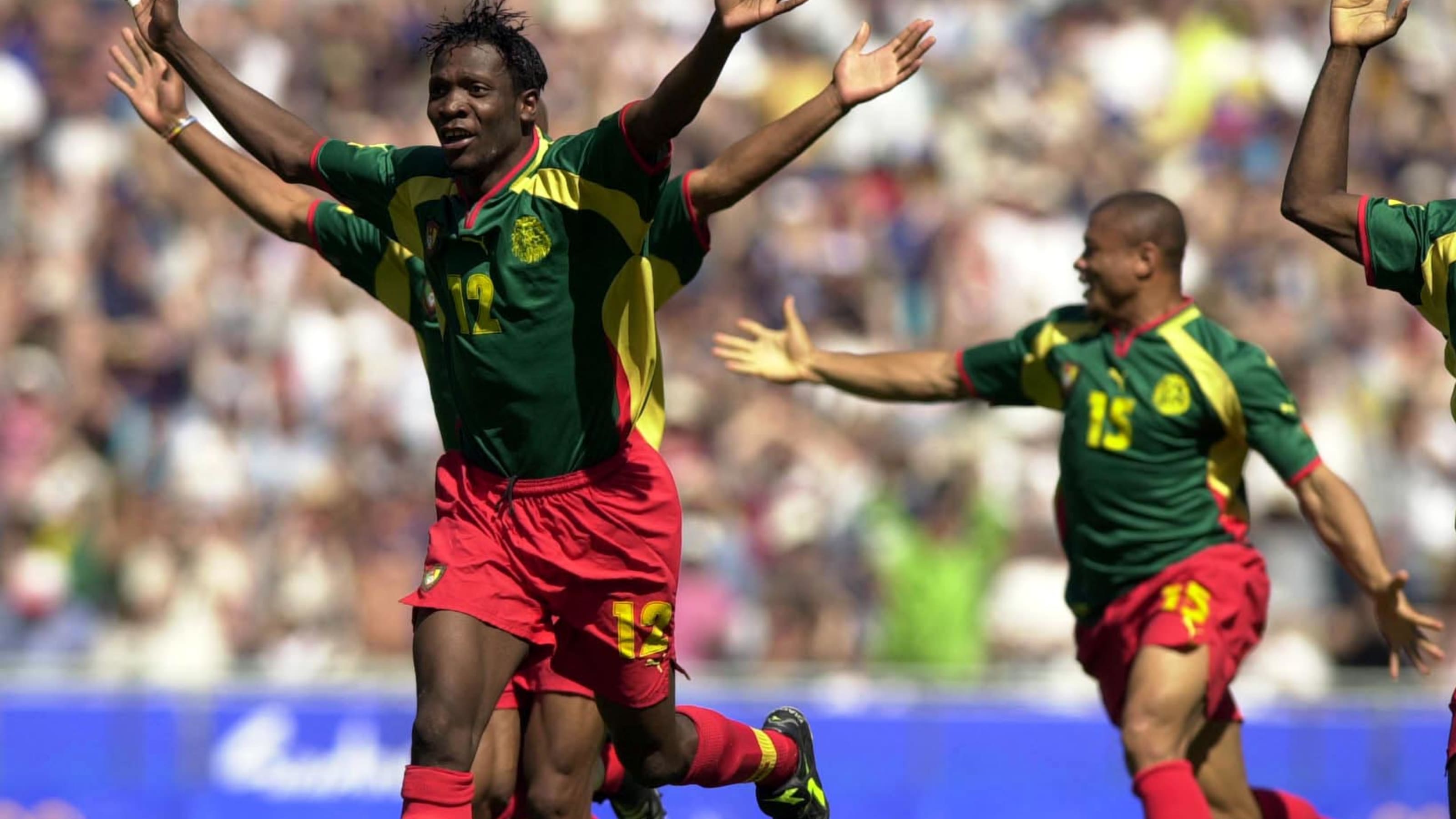
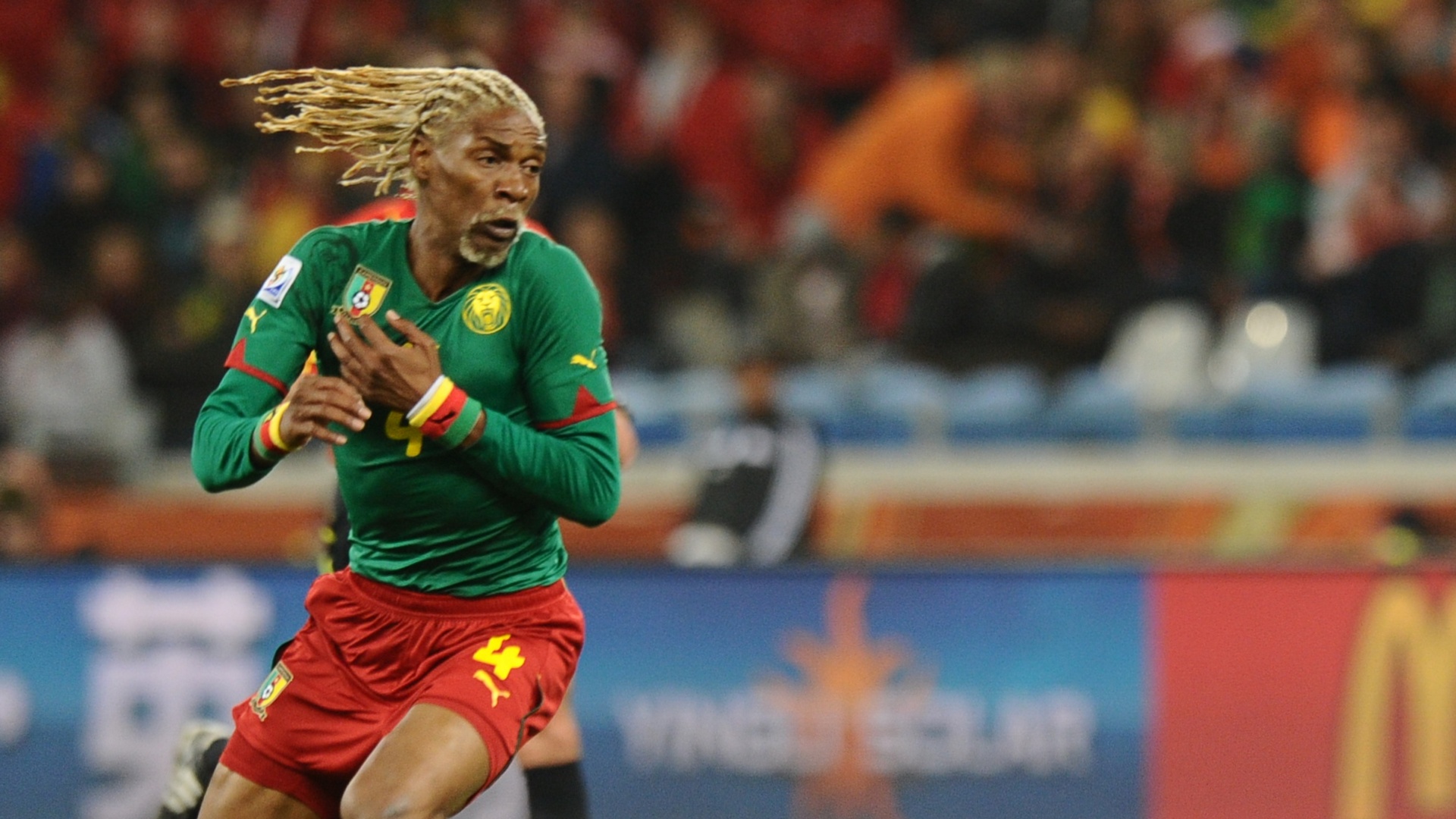
/cdn.vox-cdn.com/uploads/chorus_image/image/68751870/52943430.0.jpg)
/origin-imgresizer.eurosport.com/2012/03/01/815442-20610443-2560-1440.jpg)


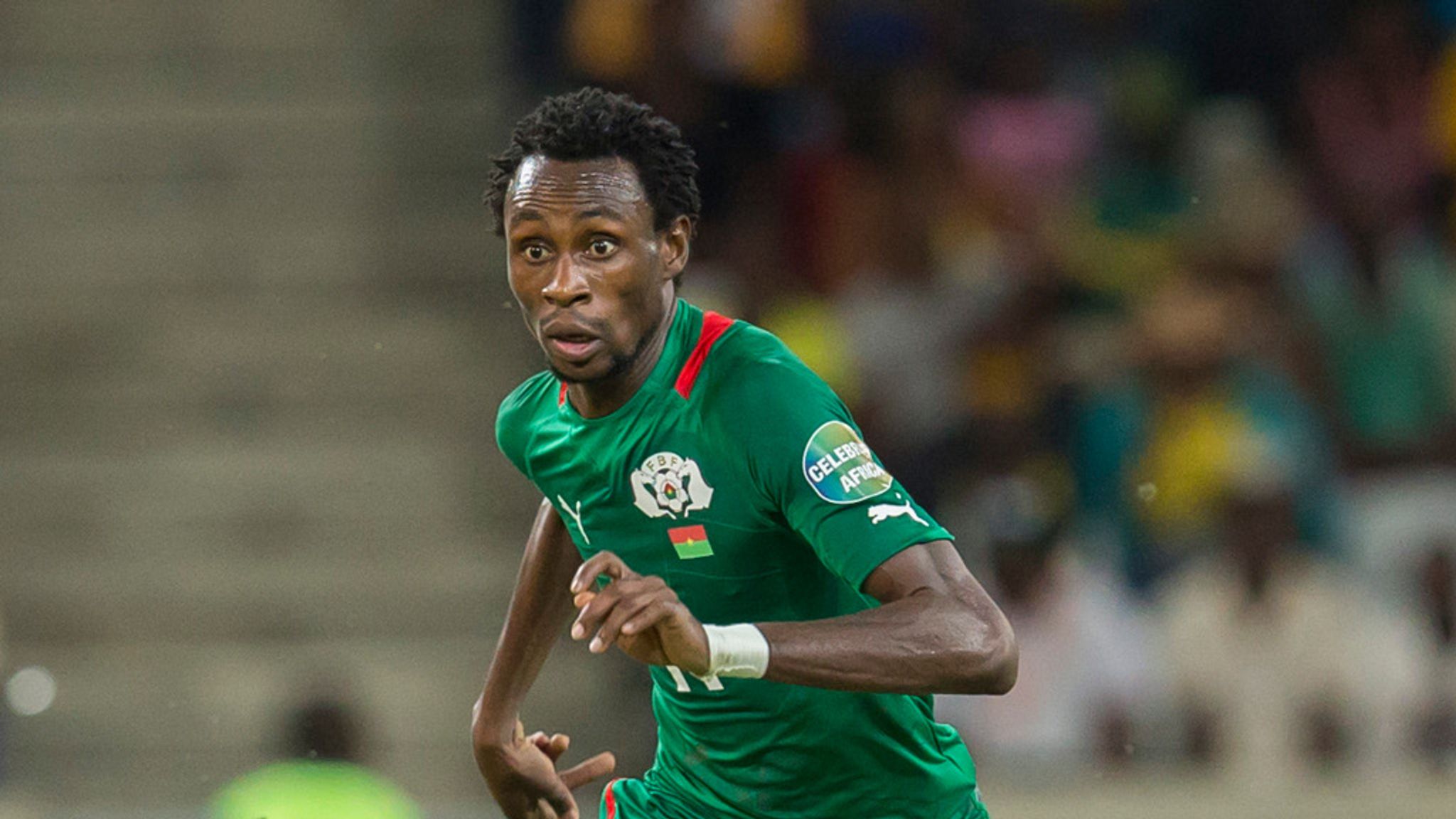


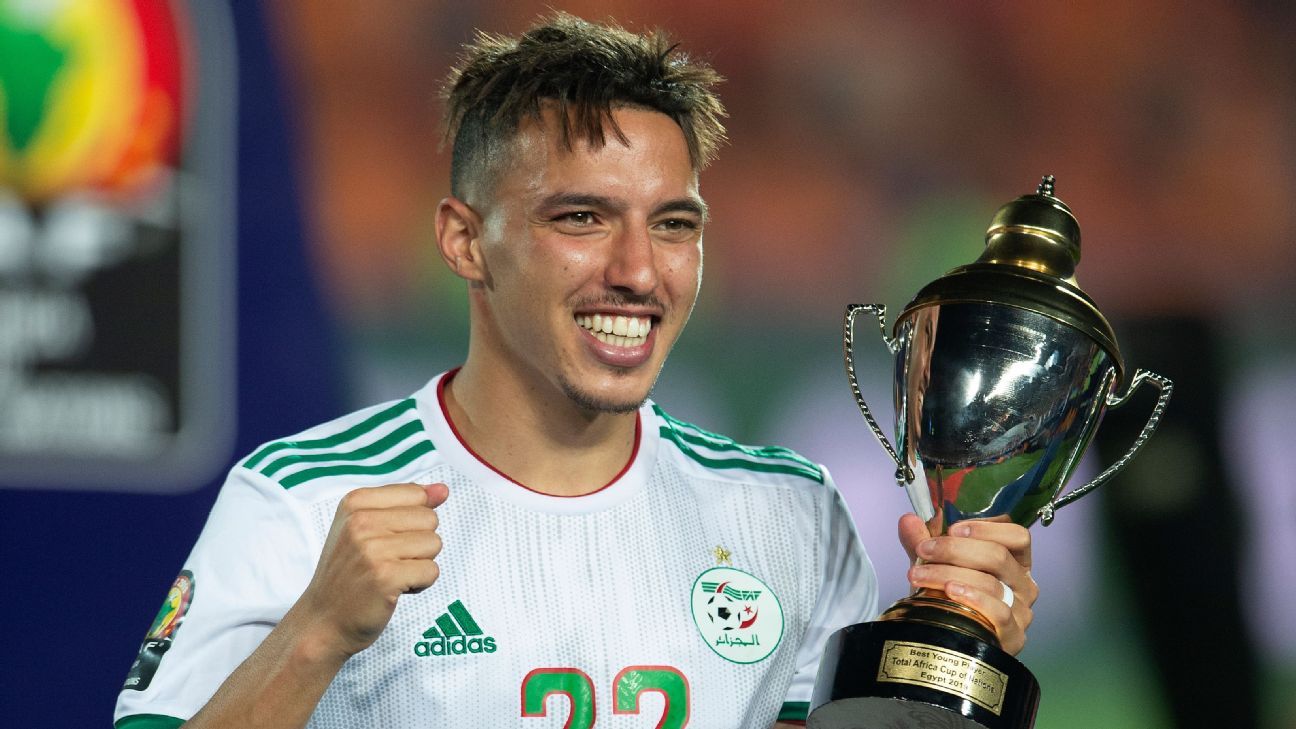






 Thoughts of Tim